

Samsung has taken a fascinating move with its foldable flagship lineup this year. Instead of the same size on its base model, the Samsung Galaxy Z Fold 8 embraces a compact passport form factor tailored for portable productivity.
After putting the device through its paces in real-world use and synthetic torture tests, our Samsung Galaxy Z Fold 8 review is ready. Here are our full findings on Samsung’s latest foldable.
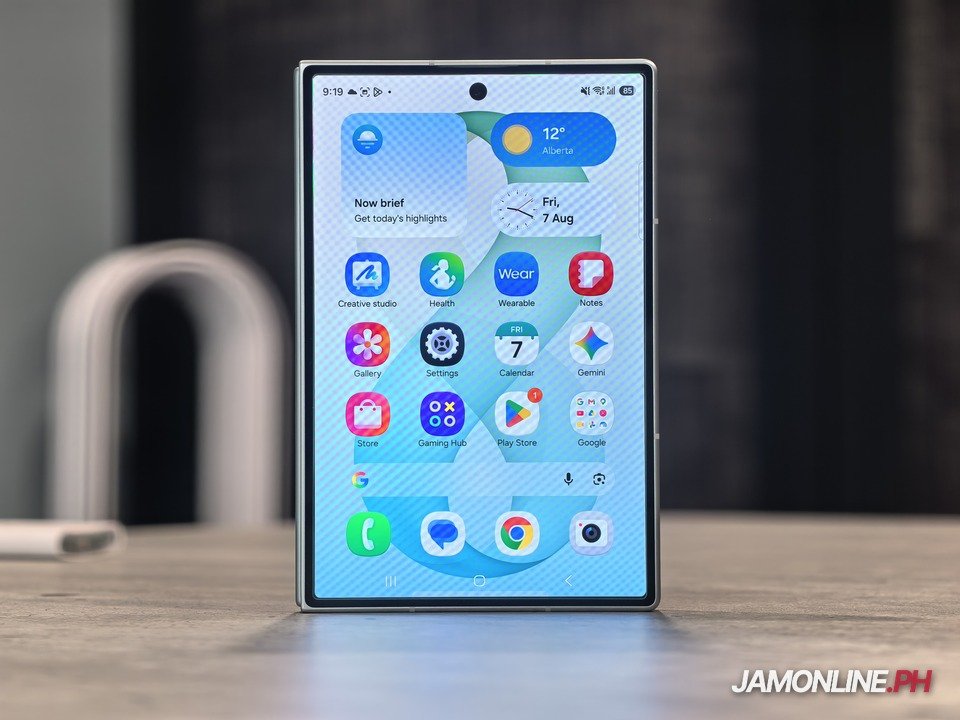
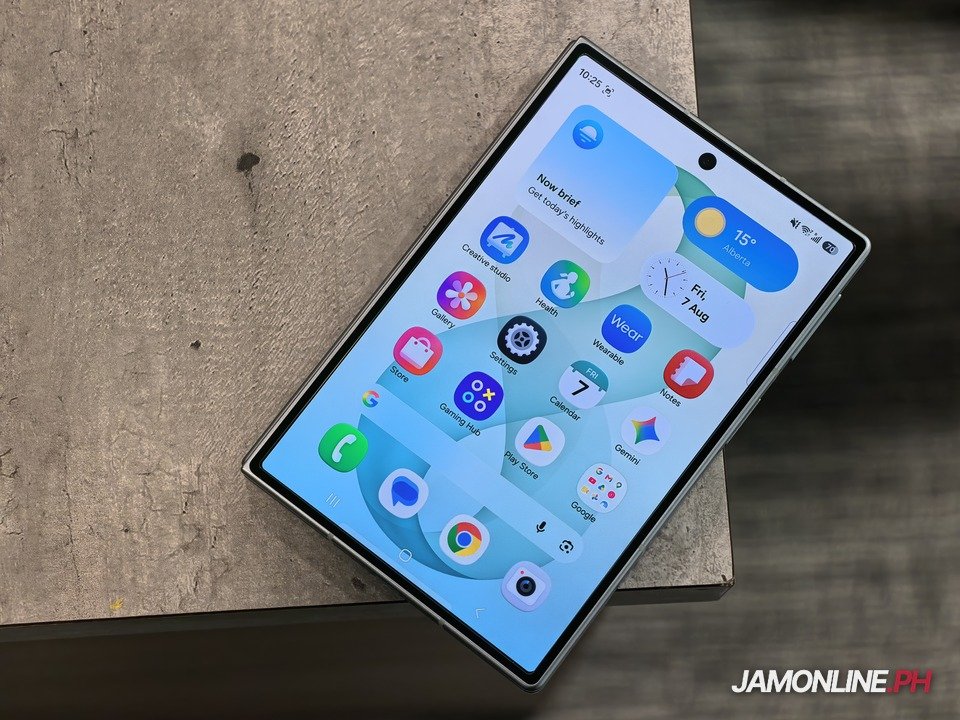
Design and Build Quality: Sleek, Light, and Pocket-Friendly
The Samsung Galaxy Z Fold 8 feels more refined the second you pick it up. Thanks to its slimmer profile and well-distributed weight, it slips into pockets effortlessly without the usual bulk of older foldables.
Having previously handled the substantially larger Galaxy Z Folds, the standard Fold 8 feels like a breath of fresh air in hand. Its passport-style makes one-handed handling and thumb reach not more manageable but content delivery is a lot better.
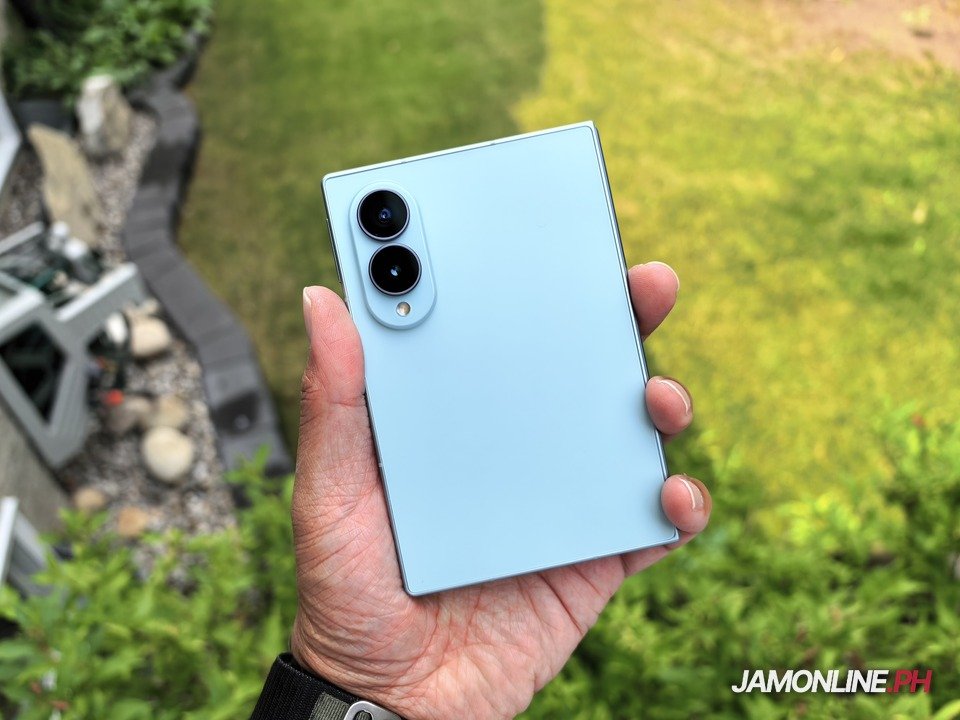
The combination of premium metal and matte glass gives the device a reassuringly solid, luxurious feel. Despite those high-end materials, the device remains impressively lightweight thanks to its tighter dimensions.
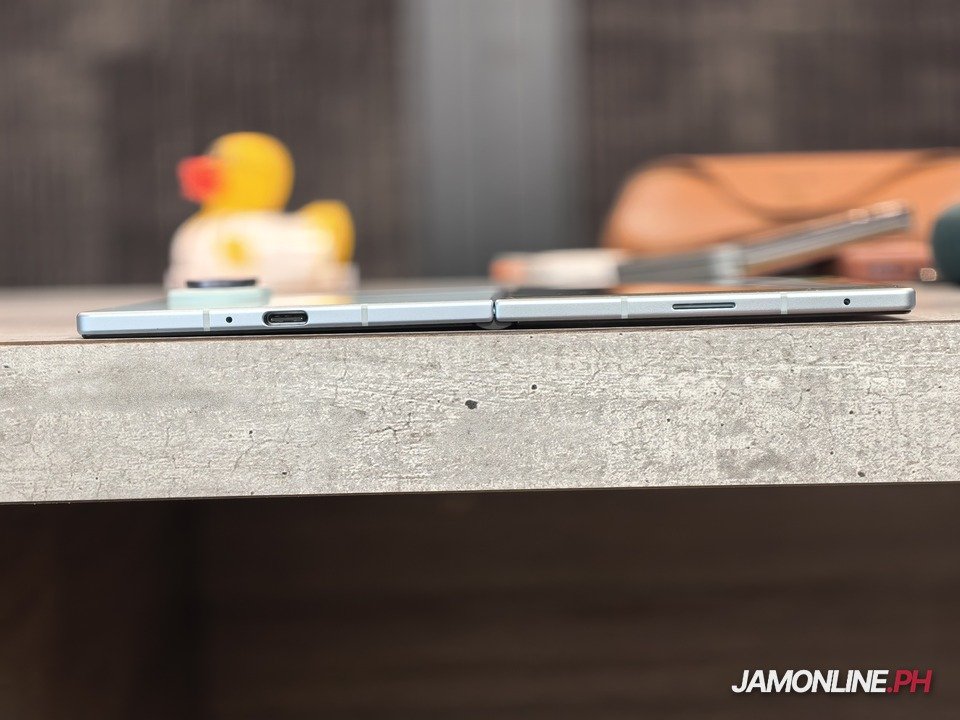
The hinge mechanism feels tough and snappy when opening and closing the device. However, we noticed that you can no longer freely set different angles in Flex Mode like previous generations, as the hinge prefers locking into set open or closed positions.
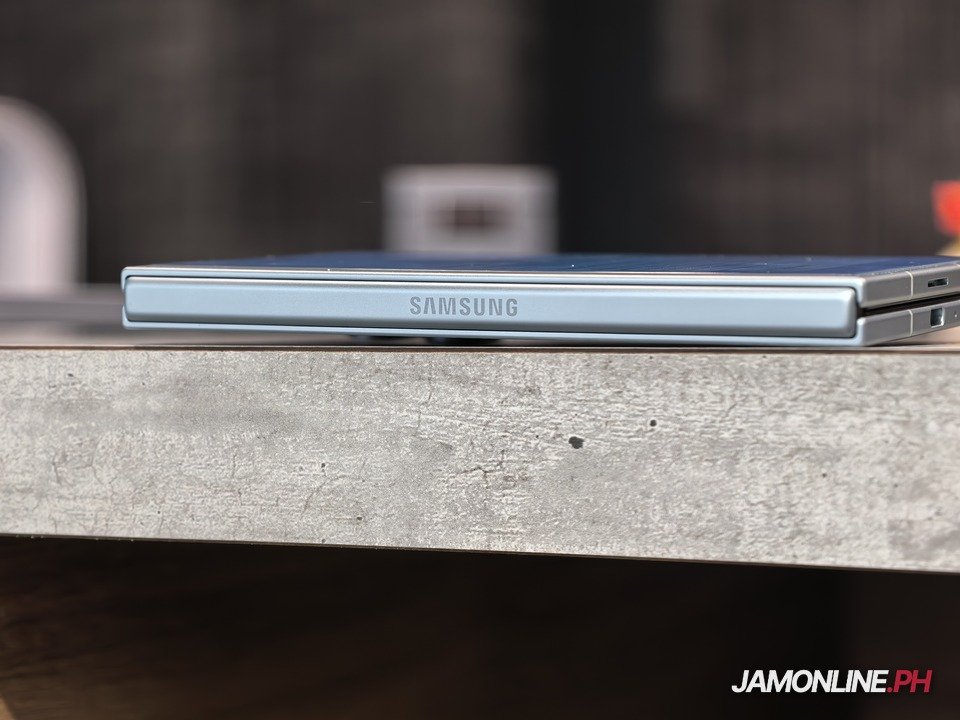
As for the inner folding crease, Samsung has practically almost perfected it. It is virtually invisible during normal use, and you would have to inspect the screen under reflective light to notice it at all. Either way, the crease was never an issue on any foldable after hours of using it.
On the downside, S Pen support remains absent, which will disappoint digital artists and note-takers.
Displays: The Tablet Aspect Ratio Done Right
The outer cover display offers a much friendlier experience for quick daily interactions. While reaching from edge to edge with one hand can still be a slight stretch, shrinking the on-screen keyboard makes one-handed typing completely painless.
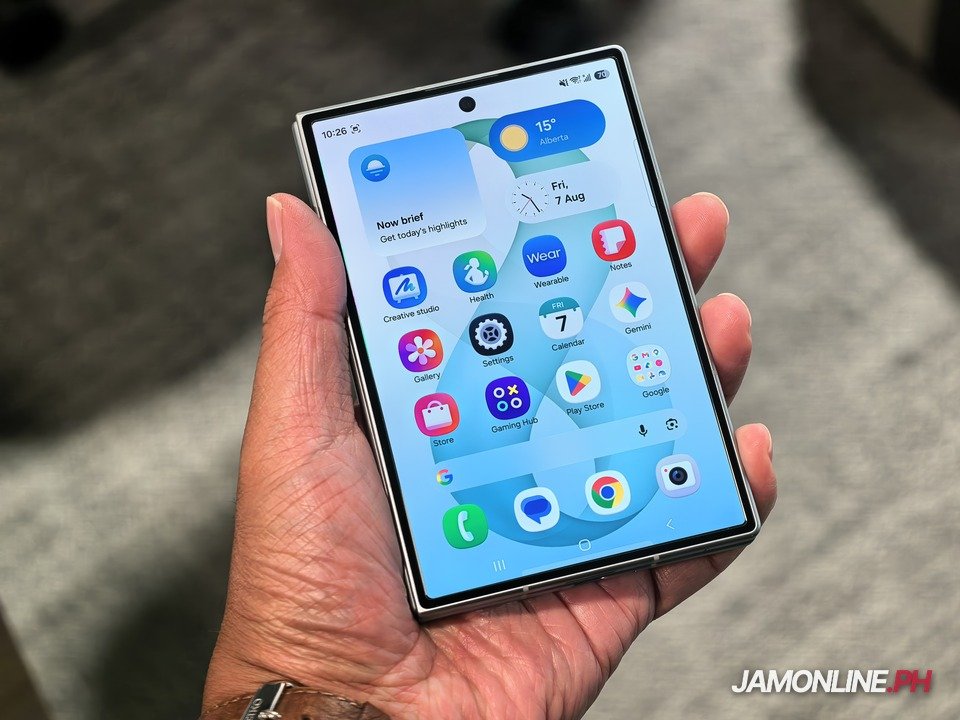
Watching video clips and firing up casual games right on the cover screen is surprisingly enjoyable due to its balanced aspect ratio. It finally feels like an authentic smartphone screen rather than a cramped secondary display on previous foldables
Unfolding the smartphone reveals a inner foldable screen with a more natural, tablet-like aspect ratio. Unlike the squarish inner canvas on the Ultra, this wider layout delivers a far superior canvas for split-screen multitasking.
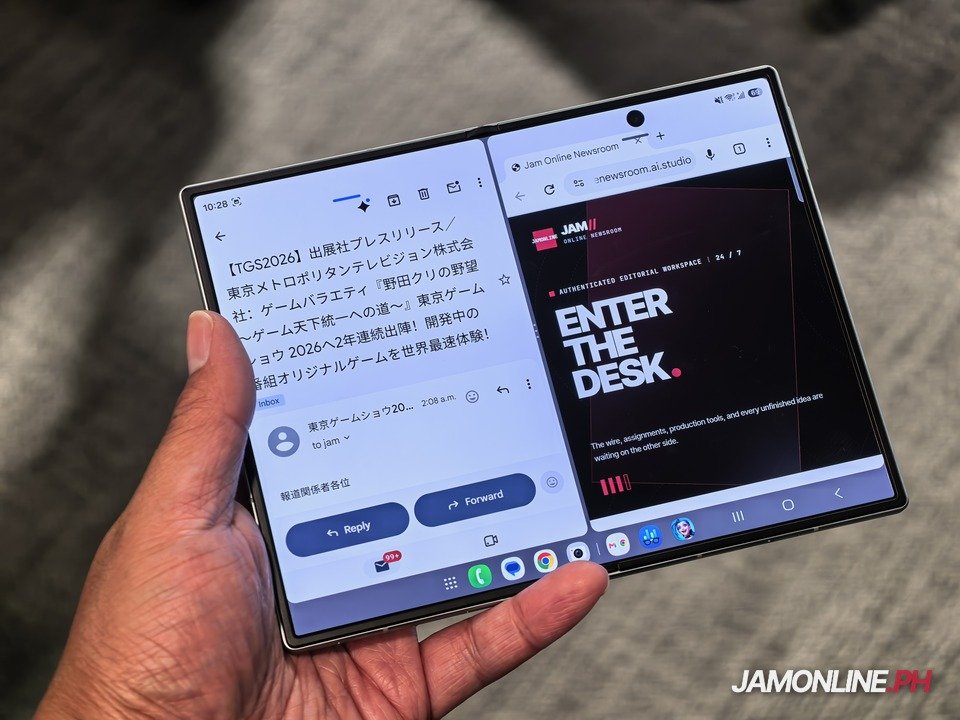
Gaming and media consumption also look significantly better on this wider foldable panel. While we still secretly hope Samsung builds an oversized Pro Max edition using this exact ratio, the current passport size strikes a great balance for workflows.
Display quality across both panels is top-tier. Colors pop with vibrant saturation, peak brightness makes outdoor viewing effortless under bright sunlight, and touch responsiveness is instant.
Performance and Gaming: Snapdragon 8 Elite Gen 5 Muscle
Under the hood, the Samsung Galaxy Z Fold 8 is powered by the custom Snapdragon 8 Elite Gen 5 for Galaxy chipset paired with Android 17. Navigating through One UI, launching heavy apps, and running split-screen multitasking is fast.
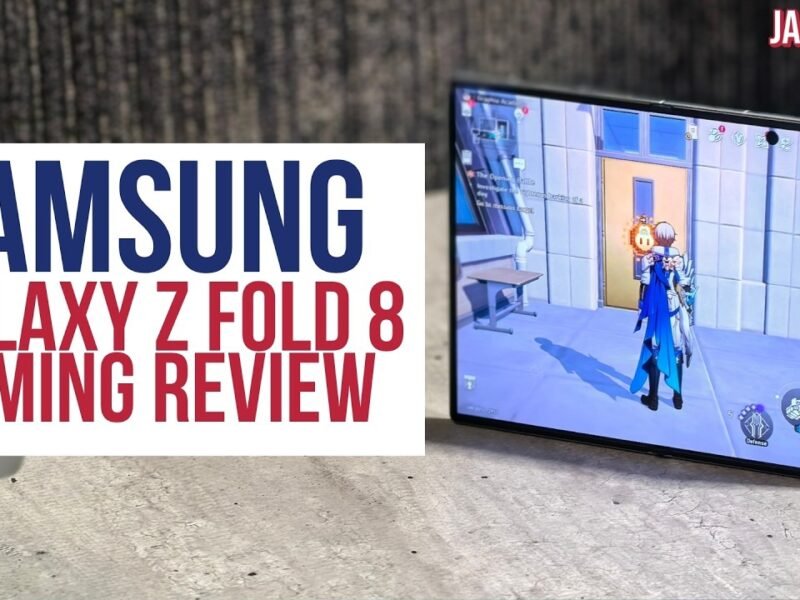
We pushed the Galaxy Z Fold 8 with intensive titles including Honkai: Star Rail, Genshin Impact, Civilization VI, and Red Dead Redemption. Every single game ran smoothly, with the tablet-like inner aspect ratio providing an immersive visual field.
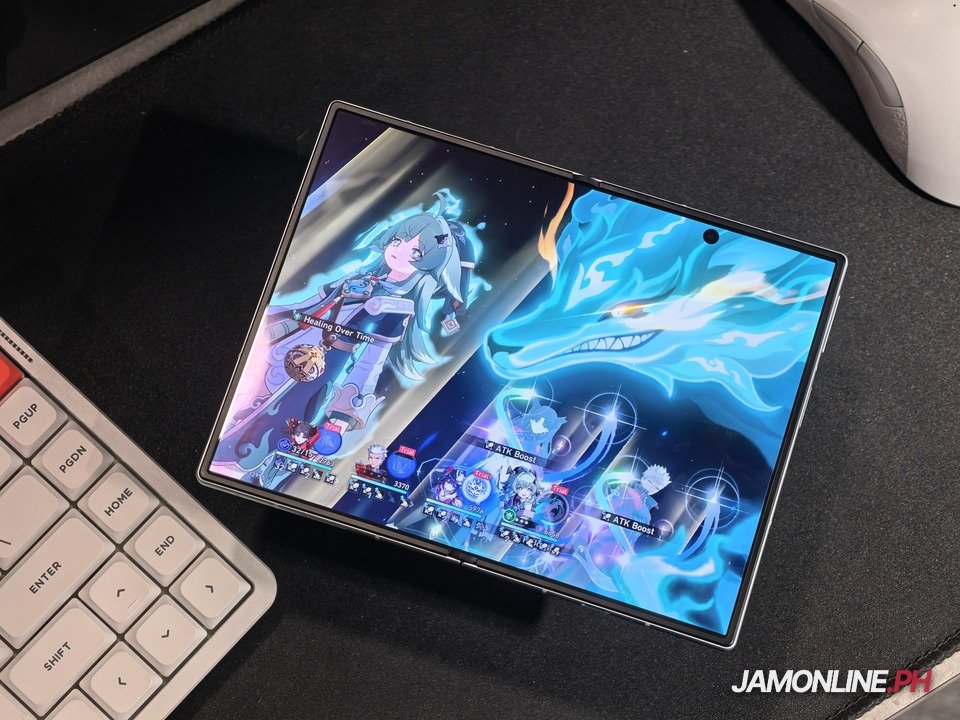
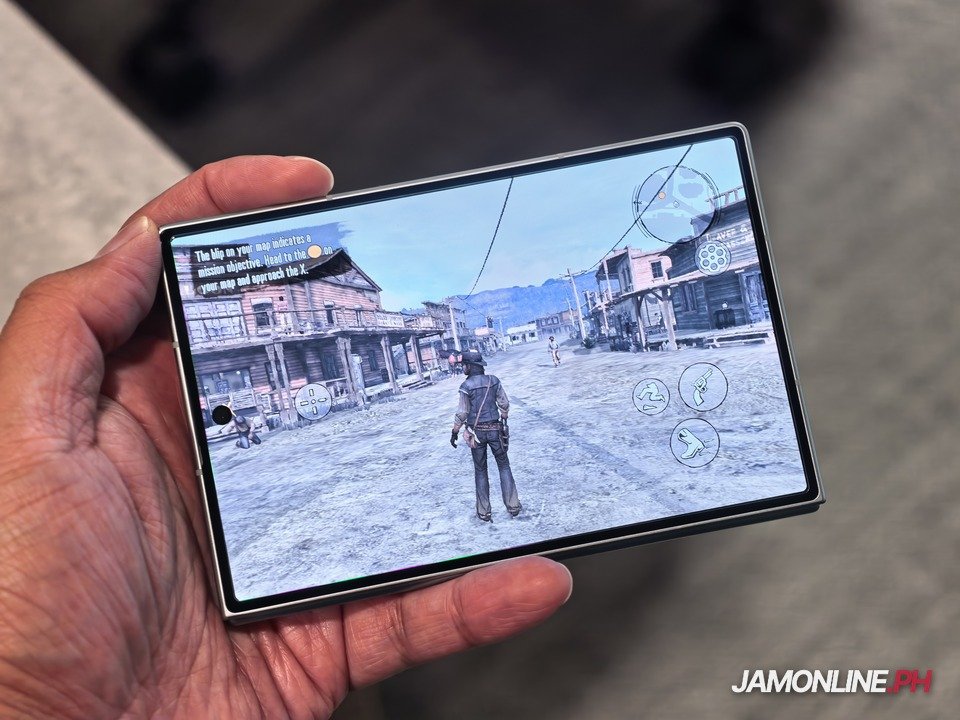
To see how the hardware holds up under sustained load, we ran the device through our standard suite of synthetic benchmarks.
3DMark Single-Run Benchmarks
| Test | Date / Time | Overall Score | Avg FPS | Notes |
|---|---|---|---|---|
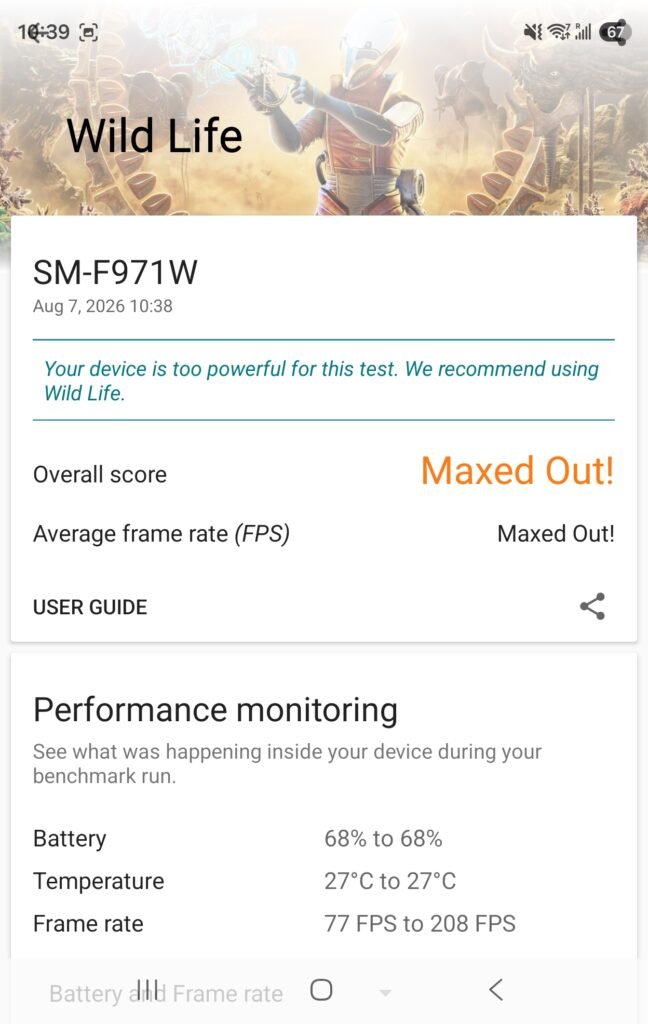
| Wild Life | Aug 7, 2026 10:38 | Maxed Out! | Maxed Out! | Device too powerful for this test (77–208 FPS, 27c flat) |
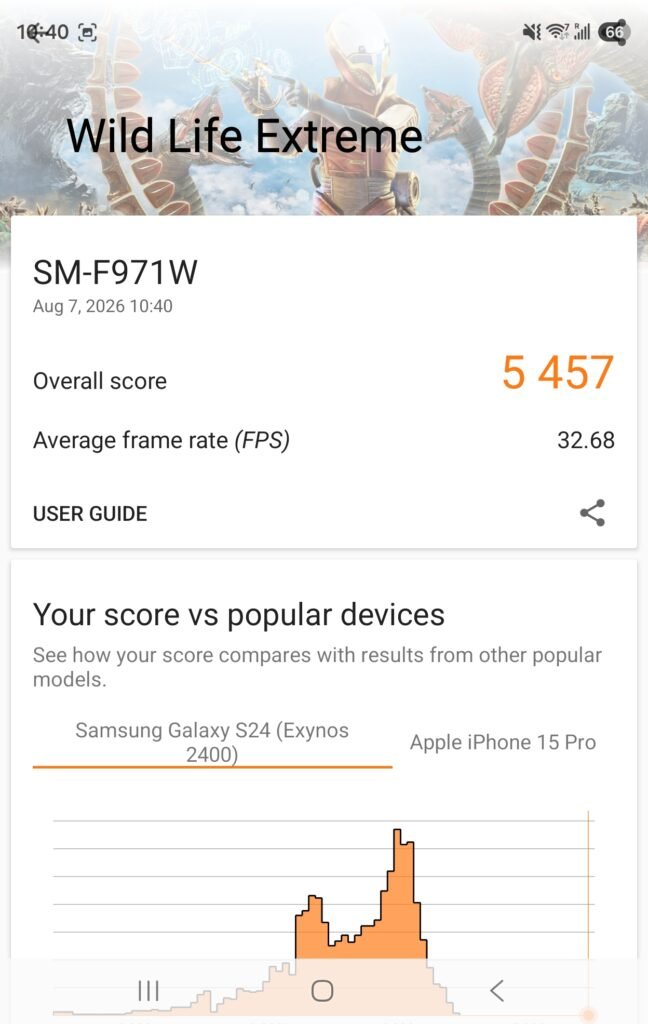
| Wild Life Extreme | Aug 7, 2026 10:40 | 5,457 | 32.68 FPS | High-fidelity 4K raster test |
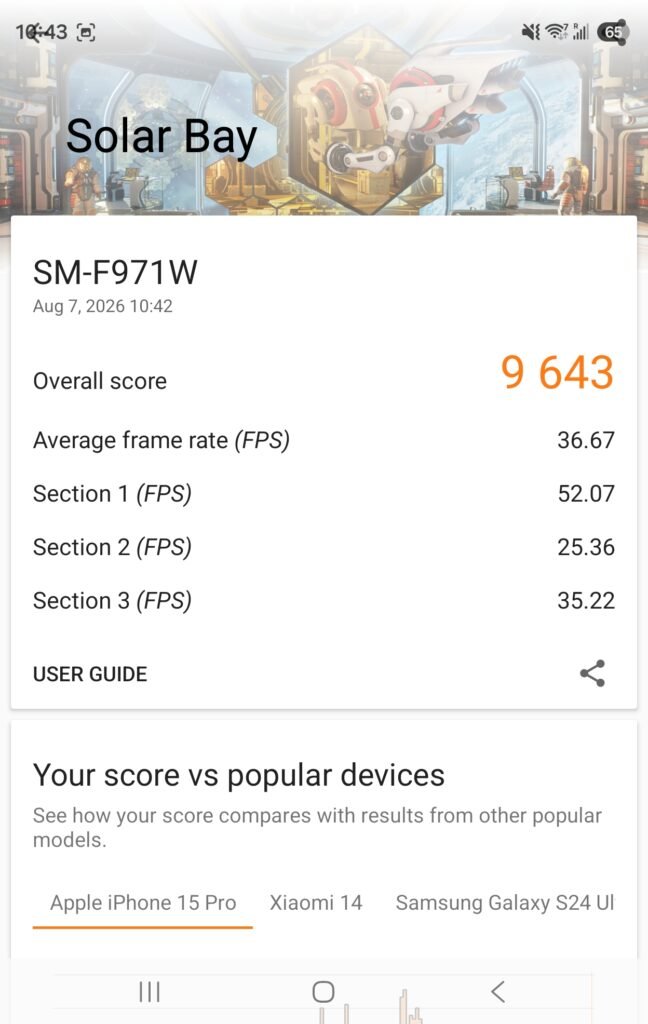
| Solar Bay | Aug 7, 2026 10:42 | 9,643 | 36.67 FPS | Ray tracing test (Sec 1: 52.07 FPS, Sec 2: 25.36 FPS, Sec 3: 35.22 FPS) |
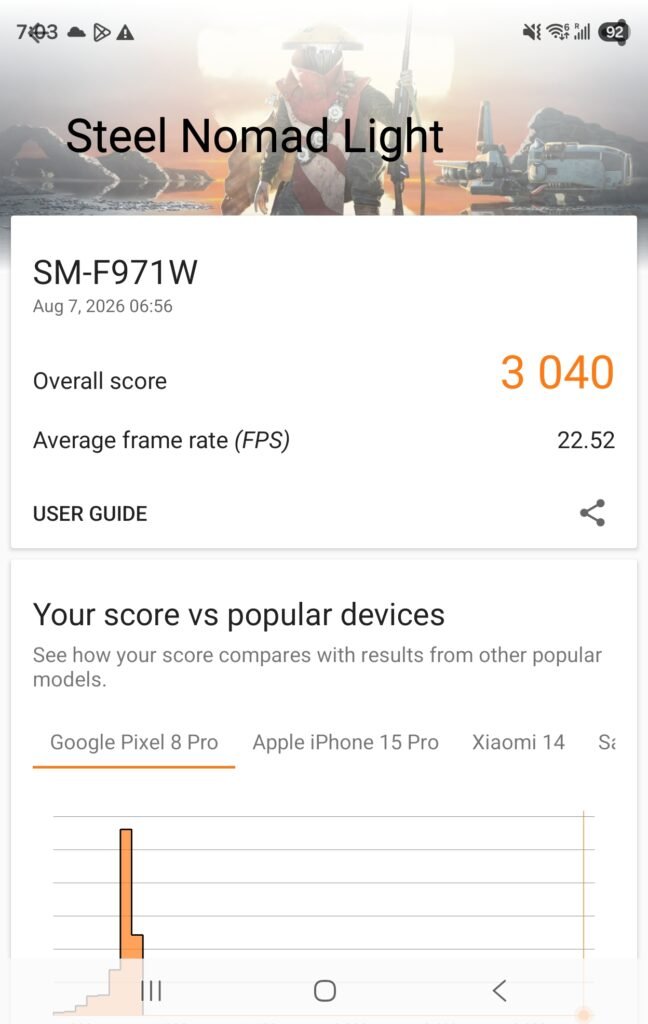
| Steel Nomad Light | Aug 7, 2026 06:56 | 3,040 | 22.52 FPS | Modern cross-platform gaming benchmark |
In short bursts, the Snapdragon 8 Elite Gen 5 for Galaxy delivers unmistakable flagship GPU muscle. It completely maxes out the standard Wild Life test at up to 208 FPS while holding 27c, and posts strong frame rates even in demanding 4K raster and ray-tracing runs like Wild Life Extreme and Solar Bay.
3DMark 20-Loop Stress Tests
| Test | Date / Time | Best Loop | Lowest Loop | Stability |
|---|---|---|---|---|
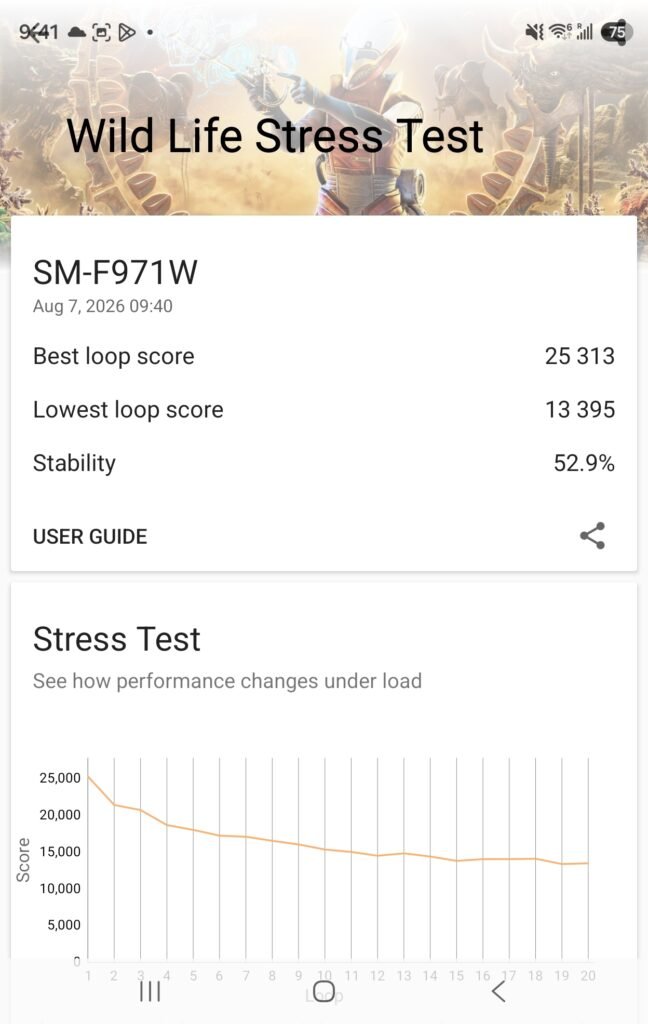
| Wild Life Stress Test | Aug 7, 2026 09:40 | 25,313 | 13,395 | 52.9% |
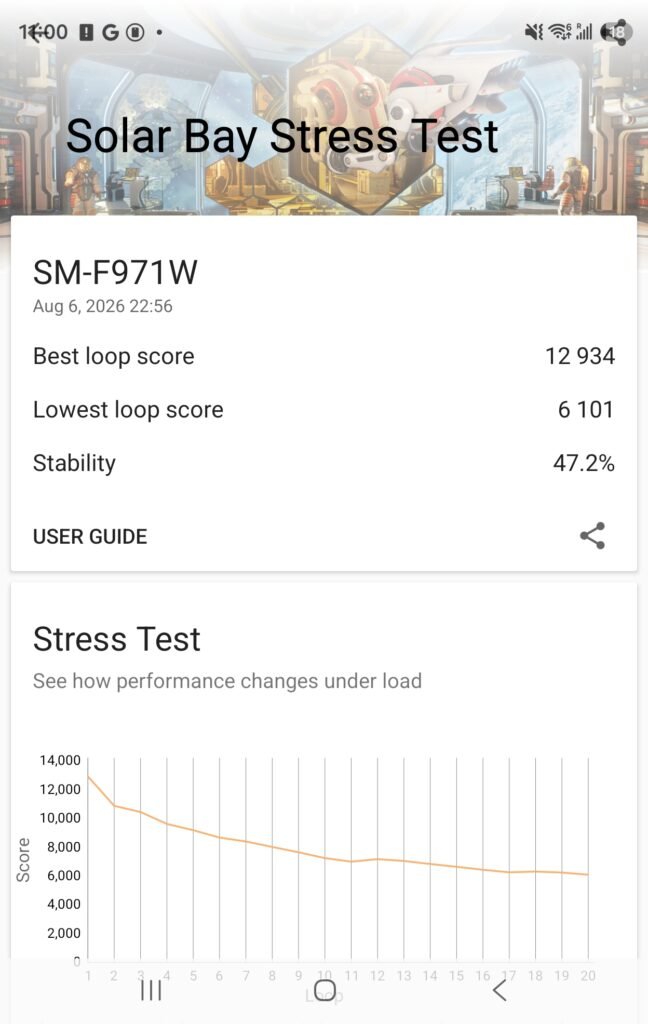
| Solar Bay Stress Test | Aug 6, 2026 22:56 | 12,934 | 6,101 | 47.2% |
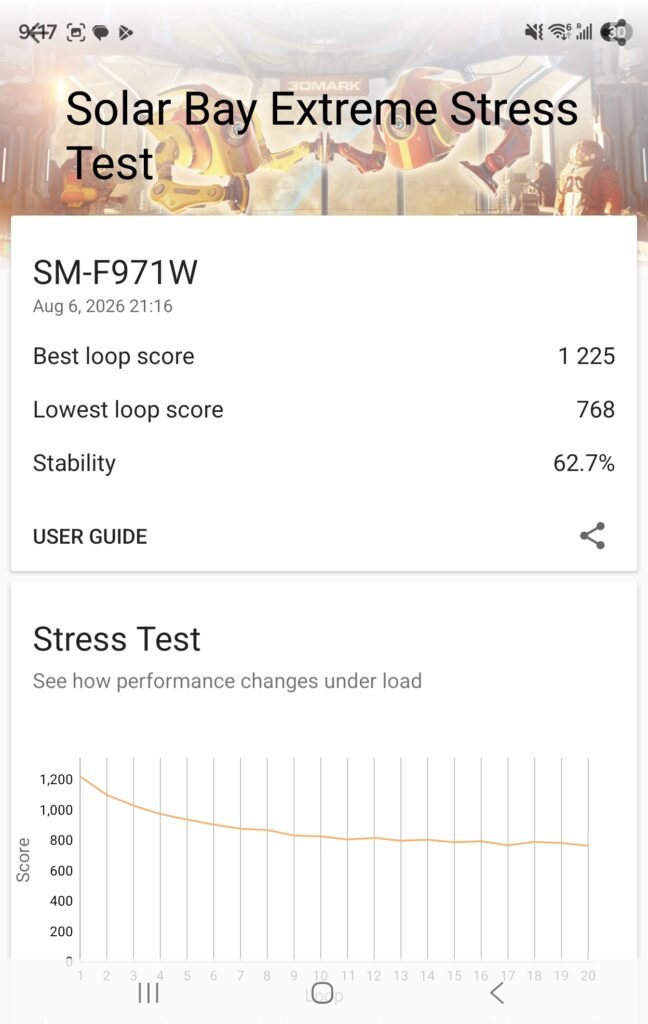
| Solar Bay Extreme Stress Test | Aug 6, 2026 21:16 | 1,225 | 768 | 62.7% |
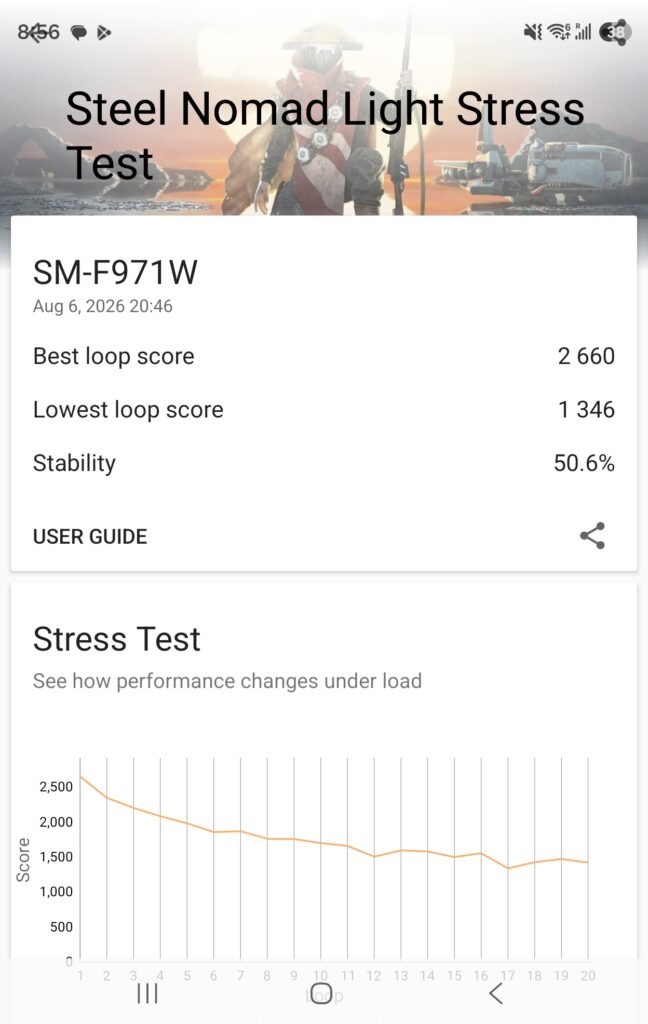
| Steel Nomad Light Stress Test | Aug 6, 2026 20:46 | 2,660 | 1,346 | 50.6% |
During extended 20-loop stress tests, the Galaxy Z Fold 8 demonstrated a classic slim thermal curve. Because a compact foldable has less room for massive cooling chambers, performance intentionally tapers after loops 1 to 2 before locking onto a steady sustained plateau from loop 10 onward.
That 47.2% to 62.7% stability window explains why peak scores drop during marathon runs, yet real-world gameplay stays smooth and surface temperatures remain comfortable in hand.
CPU, AI, and System Performance Benchmarks
| Benchmark Suite | Test Variant | Single-Core / Precision | Multi-Core / Overall |
|---|---|---|---|
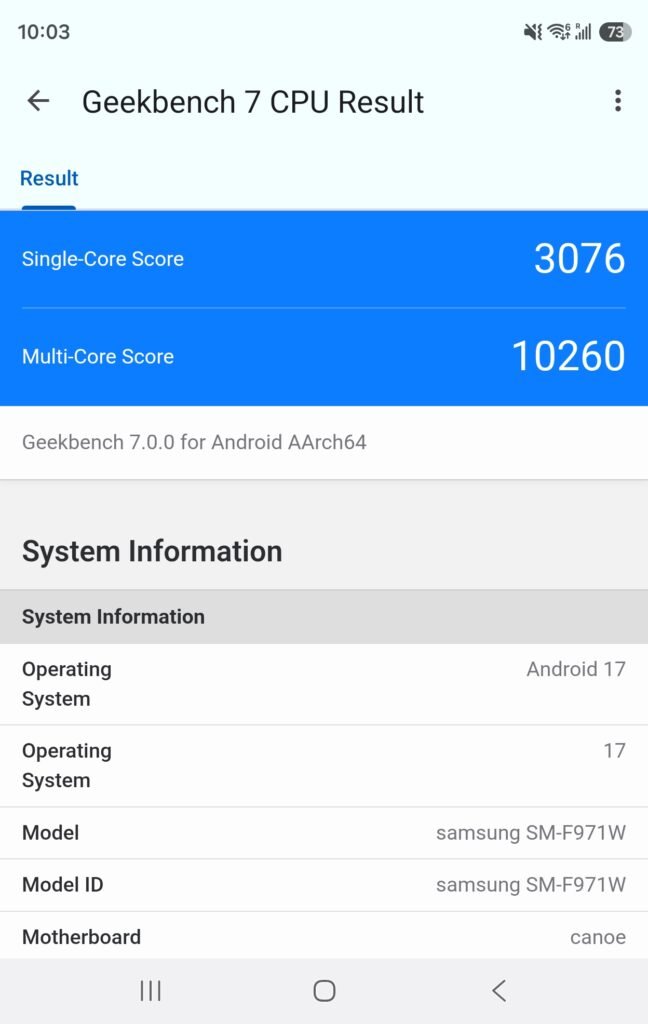
| Geekbench 7.0.0 | Android AArch64 | 3,076 | 10,260 |
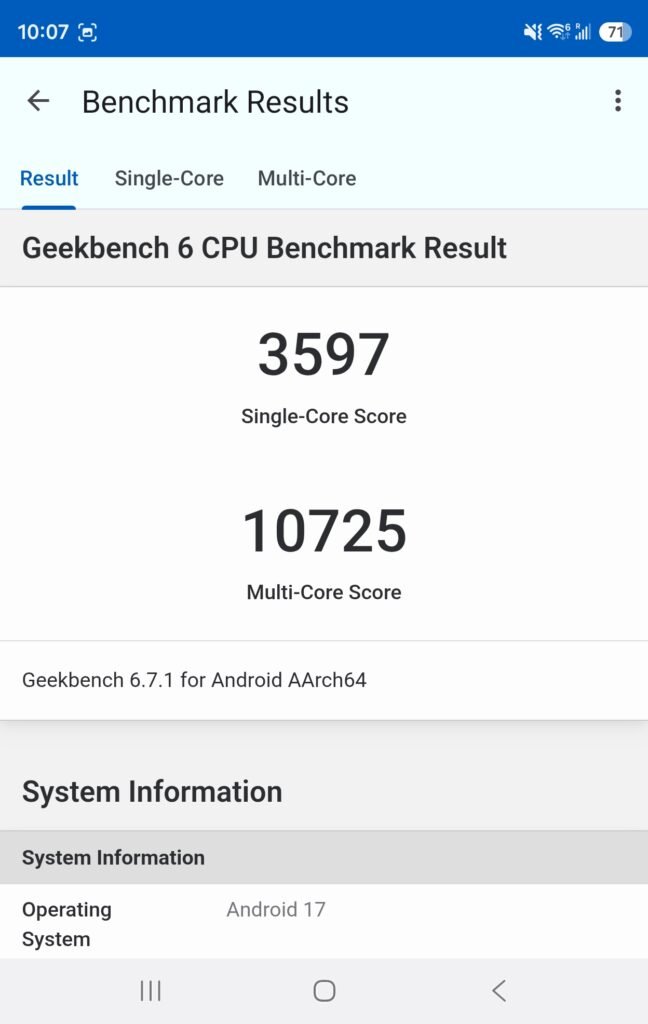
| Geekbench 6.7.1 | Android AArch64 | 3,597 | 10,725 |
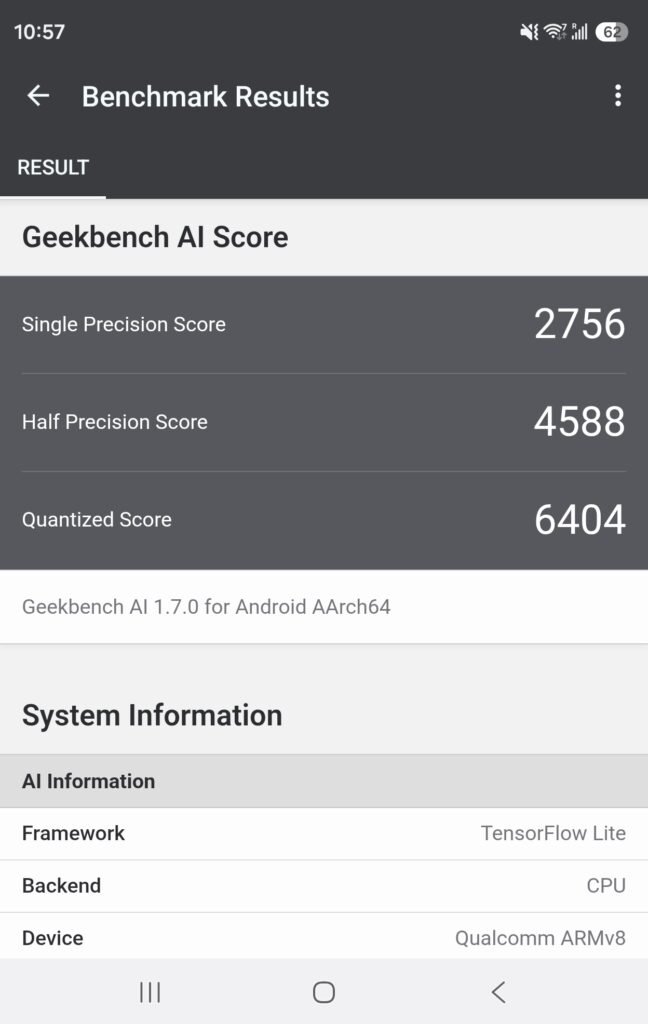
| Geekbench AI 1.7.0 | TensorFlow Lite (CPU) | 2,756 (Single) / 4,588 (Half) | 6,404 (Quantized) |
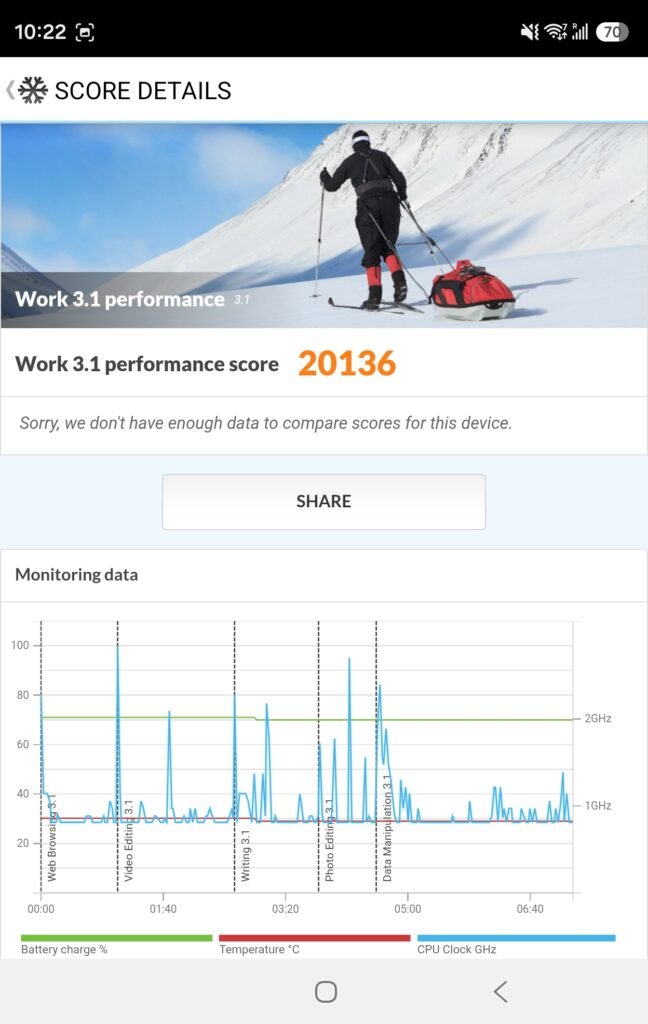
| PCMark Work 3.1 | Performance Run | — | 20,136 |
High single-core and multi-core scores across Geekbench 6 and 7 explain why app launches feel instantaneous and heavy split-screen multitasking never stutters. Meanwhile, Geekbench AI confirms strong on-device machine learning throughput for Galaxy AI tasks, peaking at 6,404 in quantized inference.
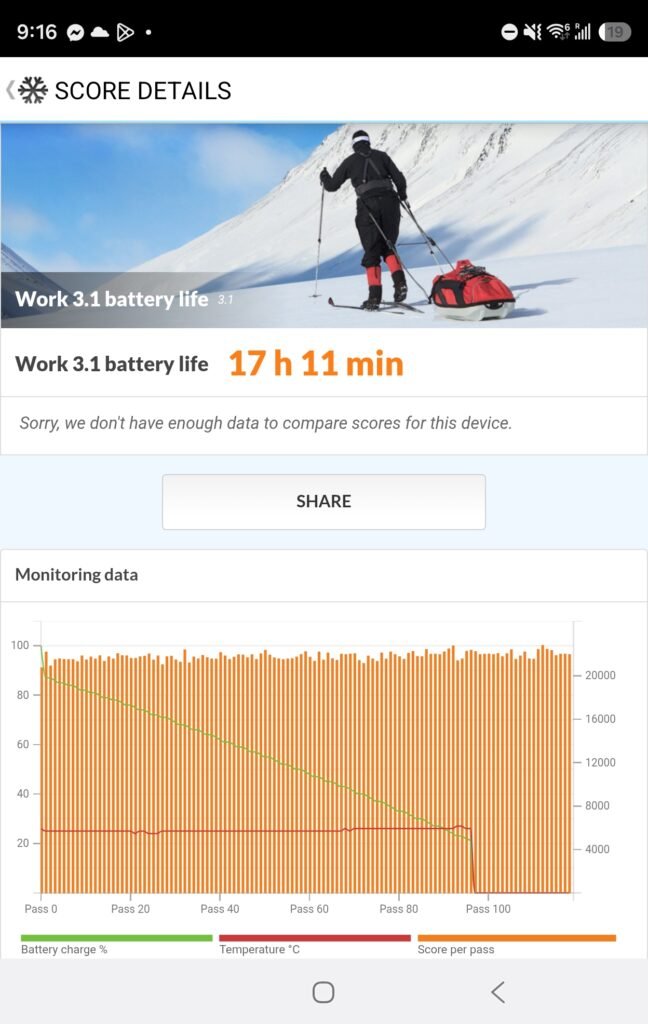
In PCMark Work 3.1, the phone posted a score of 20,136 while keeping internal thermals remarkably flat at 29c to 30c. For everyday web browsing, photo and video editing, and document manipulation, the Fold 8 never broke a sweat.
Benchmark Results:
Cameras: Practical Dual Shooters, But No Ultra Rival
The camera department is where Samsung’s product segmentation becomes most obvious. The Galaxy Z Fold 8 features a dual rear camera array consisting of a 50MP main sensor and a 50MP ultra-wide sensor.
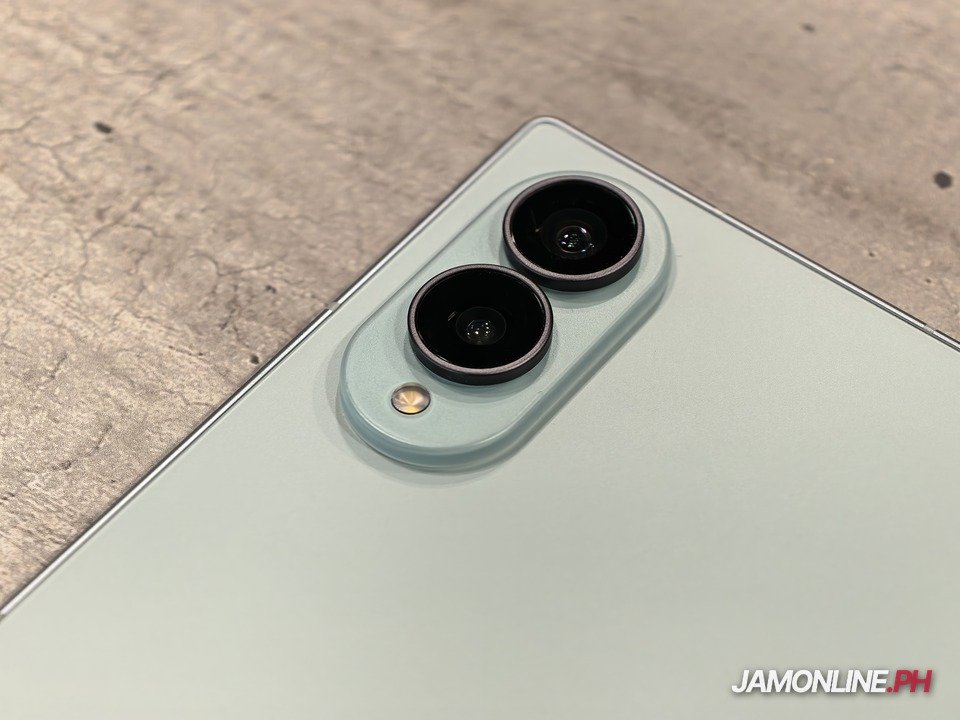
Noticeably missing from the rear module is a dedicated telephoto zoom lens. Samsung clearly wants users who demand periscope zoom to step up to the triple-camera Galaxy Z Fold 8 Ultra or go for the Galaxy S26 series.
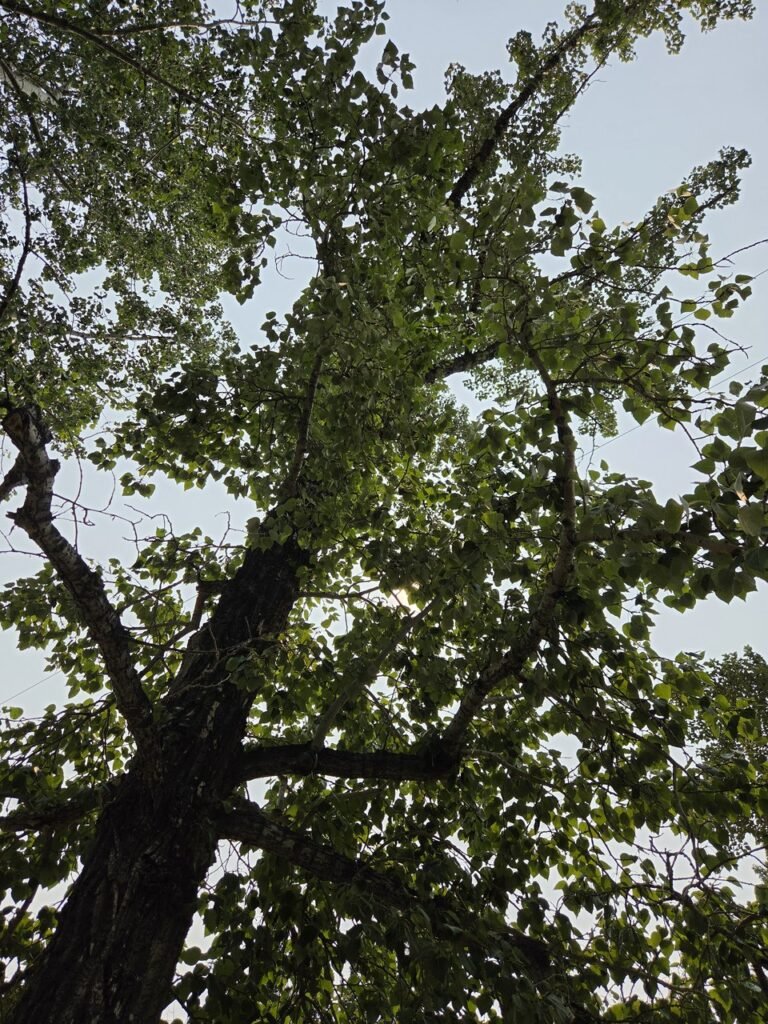
For everyday photography and social media uploads, the 50MP main sensor performs just fine. Colors are vibrant, dynamic range is solid, and shutter response is snappy in well-lit environments.
However, the image processing and fine zoom detail cannot compete with Samsung’s Ultra flagships. It is an almost-flagship camera system that gets the job done, but it will not satisfy hardcore mobile photographers.
The selfie cameras on both the cover display and inner foldable screen are serviceable for Google Meet and video calls, though they remain average for casual selfies. Thankfully, you can still use the cover display as a mirror preview to capture crisp selfies using the main 50MP rear camera.
Ultimately, this dual-camera setup proves that the Galaxy Z Fold 8 is positioned as a productivity and multimedia powerhouse first rather than an imaging champion.
Sample Photos:













Battery Life and Charging: Marathon Endurance, Modest Speeds
Battery endurance on the Samsung Galaxy Z Fold 8 is nothing short of exceptional. In our PCMark Work 3.1 Battery Life test, the smartphone clocked an impressive 17 hours and 11 minutes running down to 20%.
When it comes to recharging, the Galaxy Z Fold 8 supports 45W wired charging. While 45W is reliable enough for top-ups, it still pales in comparison to rival foldables from Chinese brands that push 65W to 100W+.
In 2026, 45W charging feels undeniably midrange on an expensive flagship foldable. We hope Samsung finally steps up its charging game in the next generation.
Samsung Galaxy Z Fold 8 Specifications
| Specification | Details |
|---|---|
| Processor | Snapdragon 8 Elite Gen 5 for Galaxy |
| Operating System | Android 17, One UI |
| Rear Cameras | 50MP Main + 50MP Ultra-wide |
| Front Cameras | Cover Display Selfie + Inner Display Camera |
| Charging | 45W Wired Fast Charging |
| Form Factor | Passport style compact foldable, glass and metal build |
Final Verdict: Who Is the Galaxy Z Fold 8 For?
The Samsung Galaxy Z Fold 8 is a thoughtfully engineered foldable that prioritizes real-world portability and multitasking efficiency. Its passport-sized form factor, lightweight chassis, near-invisible crease, and tablet-like screen ratio make everyday productivity a genuine joy.
Coupled with top-tier Snapdragon 8 Elite Gen 5 performance and outstanding 17-hour battery endurance, it handles work and high-end gaming with absolute ease.
At the same time, the compromises are clear. The removal of the telephoto lens, the lack of free-angle Flex Mode, no S Pen support, and conservative 45W charging make it clear where Samsung made cuts to keep the device compact.
If you are upgrading from a Galaxy Z Fold 5 or an older slab smartphone and want a lightweight, pocketable productivity beast, the Galaxy Z Fold 8 is an easy recommendation. But if camera versatility and periscope zoom are your top priorities, you will want to look toward the Galaxy Z Fold 8 Ultra instead.
Leave a Reply