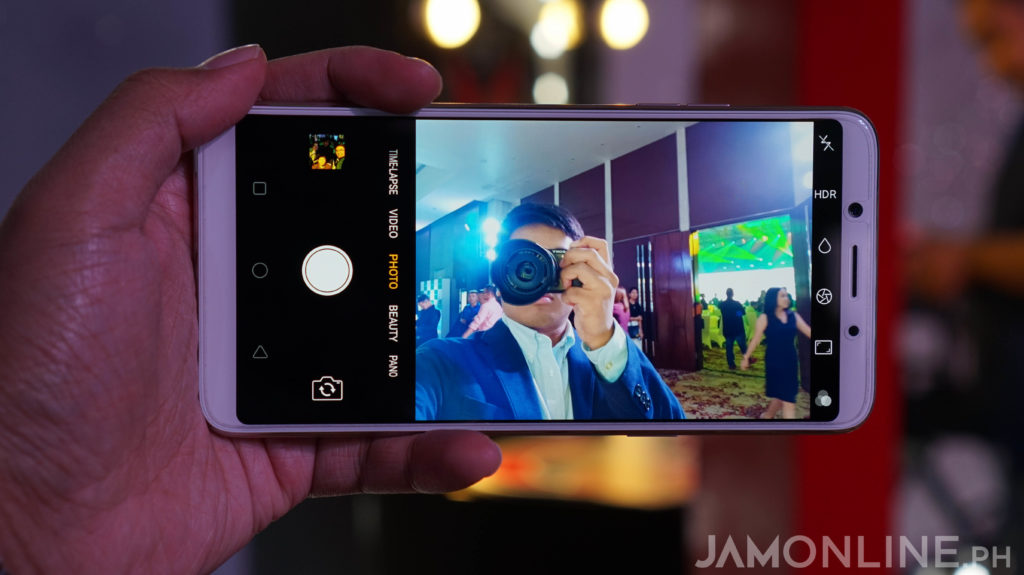
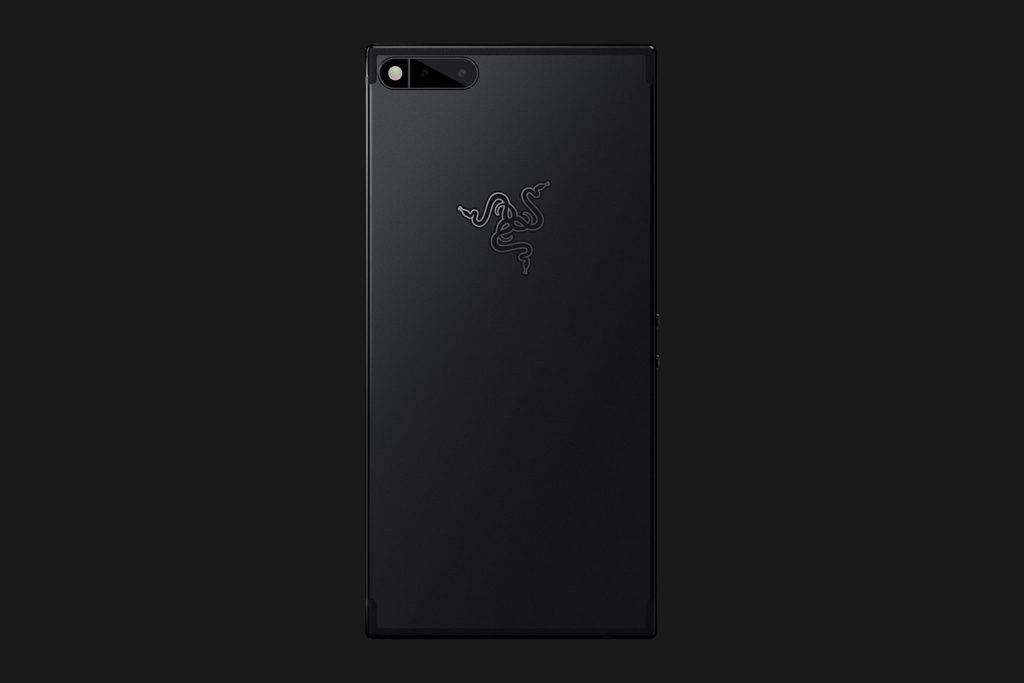
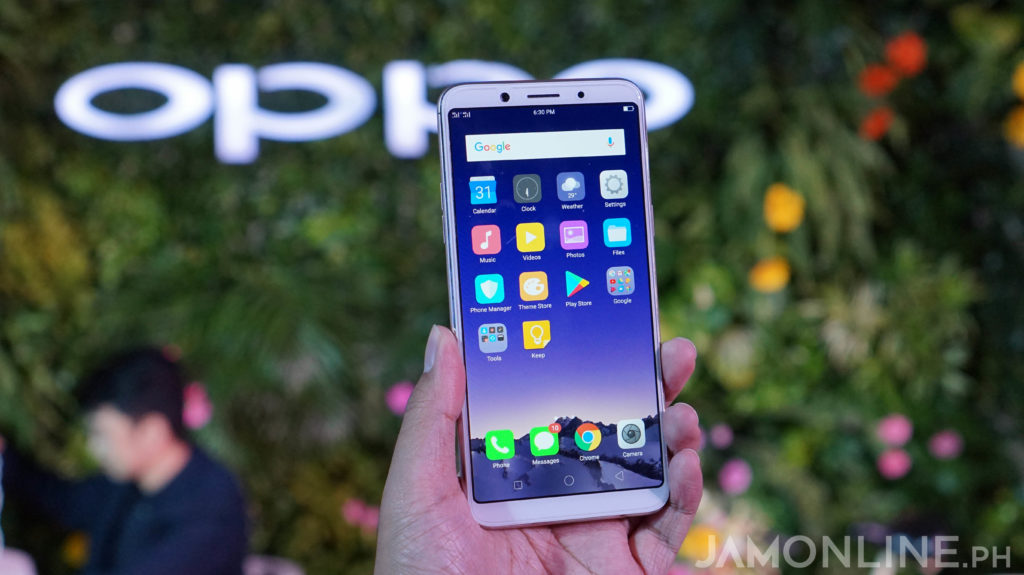
Looks like we will be having more variants of the ASUS Zenfone 4 than we thought because we will be seeing two models of the selfie-centric smartphone in the series — the ASUS Zenfone 4 Selfie and the ASUS Zenfone 4 Selfie Pro. Both smartphones will pack a dual selfie camera which is really interesting as we also see these dual selfie camera smartphones before on the OPPO F3 series.
ASUS Zenfone 4 Selfie
The ASUS Zenfone 4 Selfie will pack a 20MP + 8MP Selfie camera setup while the ASUS Zenfone 4 Selfie Pro 24MP + 5MP front camera with both of them rocking a field of view of 120-degrees which will be great for group photos without the use of tripods or monopods. Both smartphones will pack a 16-megapixel rear camera and unfortunately, there’s no dual camera setup at the back.
ASUS Zenfone 4 Selfie Pro
The smartphones will also pack a 5.5-inch display with a 1080p AMOLED display on the Selfie Pro and a 720p display on the Selfie. The chipsets of these smartphones will not be new as the ASUS Zenfone 4 Selfie will run on a Snapdragon 430 processor while the Selfie Pro will run on a Snapdragon 625 processor which is also used on the ASUS Zenfone 3. Both smartphones will also pack a 4GB RAM with 64GB Storage and a 3000mAh Battery.
Well, the ASUS Zenfone 4 series is expected to be unveiled next week so yeah. Watch out.
Lenovo has just launched the K8 Note in India and the smartphone packs a dual lens camera and a quite decent specifications. The Chinese company’s newest smartphone also packs a MediaTek Helio X23 processor inside. The smartphone might have a simple and generic design but it surely brings a decent price for its hardware. Check out the full specs of the Lenovo K8 Note below.
Lenovo K8 Note Specs
5.5-inch Full HD IPS Display
2.3GHz MediaTek Helio X23 Deca-Core Processor
3GB/4GB RAM
32GB/64GB Internal Storage expandable via MicroSD
13-Megapixel + 5-Megapixel Rear Camera with LED Flash
13-Megapixel Front Camera
LTE
Dual SIM
WiFi, Bluetooth, GPS, A-GPS
Splash Resistant
4000mAh Battery
Android 7.1.1 Nougat
The dual lens camera of the Lenovo K8 Note is used to create bokeh shots on the smartphone. The 5-megapixel camera is the depth sensor that is responsible for blurring the background of your images while the 13-megapixel camera is the main camera of the smartphone.
The Lenovo K8 Note will come in 3/32GB and 4/64GB variant and it is priced at INR12,999 (Php10,312) and INR13,999 (Php11,105) respectively. Unfortunately, no word regarding the local availability of both smartphones
The upcoming and rumoured iPhone 8 has leaked out again and this time, the leaked photo shows us a more detailed and clearer look of what seems to be the next generation of iPhone. Not just that, another leaked photo has also showed a new color of the iPhone 8 — copper.
The iPhone 8 also shows that the home button is also missing on the smartphone which suggests that the iPhone 8 now packs an on-screen fingerprint scanner.
The iPhone 8 is expected to be launch next month so yeah, stay tuned.
The ASUS Zenfone 4 Series is expected to be launch next week in Taiwan followed by the local launch here in the Philippines next weekend. ASUS has also announced their newest ambassador for the Asia Pacific, Gong Yoo and it was also shown that he was holding an ASUS Zenfone 4 that packs a dual lens rear camera. Well, things just got more interesting as there’s a new leak of prices for the whole ASUS Zenfone 4 series family.
ASUS Zenfone 4 Series Price (Converted directly to Philippine peso)
ASUS Zenfone 4 Max (Php10,047)
ASUS Zenfone 4 Selfie (Php16,758)
ASUS Zenfone 4 Snapdragon 630 (Php18,435)
ASUS Zenfone 4 Snapdragon 660 (Php23,468)
ASUS Zenfone 4 Pro (Php31,855)
The leaked prices just confirmed that the Zenfone 4 family will be composed of ASUS Zenfone 4 Max, ASUS Zenfone 4 Selfie, ASUS Zenfone 4 in Snapdragon 630 and Snapdragon 660 variant and of course, the ASUS Zenfone 4 Pro which is expected to be running on Snapdragon 835 processor.
Ever experience browsing the internet or playing games then just immediately experience lags and disconnections? Well, we all do. We hate that when that happens especially to those people who rely on the internet for their livelihood. Yes, it happens but do you know the things that affect the WiFi performance at our homes. Well, we will talk about it in our post today.
As a gamer and streamer (Sometimes!), the internet connection is very important to me because a single disconnection in-game can really affect my gameplay and experience and at home, having a very reliable Wi-Fi is very crucial to me as I always use my WiFi on my Playstation 4 or on my laptop. So when I set up my WiFi at home, I always consider these things that affect our WiFi Performance.
Limited radius
Here’s the thing with the routers that comes with every internet plan that you’ve applied for. Most of the time is that these routers are not really that great. If you got a big house then expect that this single router that you have might not reach the other parts of your house. Oh and yes, those walls and ceilings do block the signals of your WiFi.
Solution: Be sure to place your router in the most ideal place in your house so that the signal of the WiFi can spread in your house. But in case your home or office is too big for a single router then better buy another one or better yet, an extender.
Interference by microwaves
Well, it’s really true that microwaves can really interfere with your WiFi signals at home so it’s better to place your routers away from microwaves or any devices that emits bands similar to microwaves. So how does it interfere with our WiFis? Well, the microwaves emits bands that are close to 2.4GHz which is also used in WiFis
Solution: Place your router away from the microwave
Bandwidth Usage
If there are a lot of devices that are connected to your WiFi then expect that it can affect the speed of your internet and also the performance of the WiFi at your homes. If your router has been spending a lot of bandwidth to a single device because that device is watching a YouTube video or downloading a large file then expect that other users will have a poorer performance.
Solution: Get a better router than can suffice the needs and demands of the users at your place.
Router
If you are already hopeless and your router is still not enough for your home then yes, a new router or extender at home would be nice.
Solution: GET A BETTER ROUTER!
Look guys, I’m not forcing you to buy a new router but in order to have a better and smoother WiFi experience at home then better get a router that can really reach almost all rooms at your home. In my case, I bought a router for my home because I don’t want to experience interruptions on my gaming and streaming at home.
So next time you experience a crappy WiFi connection at your home then better follow the solutions above and again, if you really want to experience a smooth and seamless WiFi connection at your home then better get a good router for your home.
But hey, it will be really nice if I can have the best WiFi solution at home for a full and uninterrupted WiFi experience. I mean, it would be really nice if I can have something that won’t give me a hassle or problems looking for the best WiFi solution at my home.
Vivo Philippines has just announced a pricedown for their both smartphones, the Vivo V5 and the V5 Plus. These smartphones are now available in the market but the recent pricedown of the smartphone makes the smartphone even more interesting. The Vivo V5 is now priced at P10,990 from P12,990 while the Vivo V5 Plus is now priced at P16,990 from P19,990.
The Vivo V5 sports a 20-megapixel front camera that is made for selfies and of course, a 13-megapixel rear camera. The smartphone doesn’t lack in power as the Vivo V5 sports a MediaTek MT6750 processor along with 4GB of RAM which is more than enough for games and applications.
While the Vivo V5 Plus is the better version of the Vivo V5 as this one is world’s first smartphone with dual front camera. It is composed of 20-megapixel camera along with an 8-megapixel which is used for collection the depth-of-field information. So yeah, you could now have front camera selfies with bokeh on this one. The Vivo V5 Plus is also better than the Vivo V5 because this one rocks a Qualcomm Snapdragon 625 processor along with 4GB of RAM and 64GB of internal storage.
The Vivo V5 and V5 Plus’ markdown is now in effect and you can now get these smartphones at a more affordable price.
One of the best selfie smartphones in the market just got a makeover as OPPO Philippines has officially announced that the red limited edition of the OPPO F3 will be coming in the Philippines very soon. The OPPO F3 Red Limited Edition will not have any special features but what we can expect from this smartphone is that the OPPO F3 Red Limited Edition will have a Red Color (Duh!) with a combination of gold accents.
We’re not sure yet what are the things that will be included in the box but again, the only we’re sure of is the color of the OPPO F3. The OPPO F3 Red Limited Edition is expected to be launched this Saturday, August 12 at SM Aura OPPO Concept Store.
Smart has just unveiled their newest product, the Smart Bro LTE Home WiFi. This little device is really made for home and yes, with the Smart Bro Prepaid LTE Home WiFi, you’ll be able to experience a fast LTE speeds in your home and yes, the Smart Bro Prepaid LTE Home WiFi is affordable and I believe that it’s a great backup for your current internet at home or wherever you are as this one is still great indoors thanks to its 700MHz support and there’s no need for wires on this one.
In case you’re wondering why this one is interesting when it comes to speed, the Smart Bro Prepaid Home WiFi has a minimum speed of 512kbps compared to the 48kbps minimum speed of mobile internet so yeah, so it’s better to use this one compared to using your smartphone for a hotspot. And yes, this one is 2x faster than the regular Smart Bro LTE Pocket WiFi.
The Smart Prepaid LTE Home WiFi is great for businesses who doesn’t consume too much data and for those people who wants to have a back up internet.
The Smart Bro Prepaid Home WiFi is now available for a one-time fee of P1995 and it will come with 10GB of data once activated.
Cherry Mobile’s first smartphones with dual lens camera come in the Flare P series and the best of the series is Cherry Mobile Flare P1 Plus. Today, we’ll review that smartphone. The Cherry Mobile Flare P1 doesn’t have the best specifications on a smartphone but it does have a dual lens camera that can do bokeh similar to the Cherry Mobile Flare P1 that we’ve reviewed before. So what do we think of the smartphone? Check out our review below.
A heavy metal body
One of the features of the Cherry Mobile Flare P1 Plus is its body. It’s metal and it’s really heavy for its size. It actually feels chunky but it does feel solid compared to other smartphones. The smartphone also packs a curvy body which makes it kinda slippery. But overall, the smartphone feels just fine to hold however the Cherry Mobile Flare P1 Plus is really heavy.
On the front of the smartphone is where you can find the 5.5-inch display and below it is where you can find the capacitive buttons, unfortunately, the buttons on the smartphone don’t lit up in the dark. At the back is where you can find the dual lens camera along with the two lines at the top and bottom similar to most smartphones these days and then there’s the fingerprint scanner.
Below the smartphone is the MicroUSB port and the speaker grill which is, by the way, is just average. while on the top of the smartphone is where you can find the 3.5mm audio jack. The smartphone can also house a dual Sim card, however, there’s no dedicated microSD card slot for the smartphone.
Overall, the design of the smartphone and its material feels solid, especially for its price range. Most smartphones at its price range still pack a plastic body. The Cherry Mobile Flare P1 Plus is solid but again, the smartphone feels really heavy.
A Full HD display
One thing that you gotta appreciate about the Cherry Mobile Flare P1 Plus is its display. It packs a 5.5-inch Full HD display and it’s actually pretty good. The viewing angles are fine and the colors of the display aren’t washed out. The display isn’t perfect but I was actually satisfied with what I see from it. The quality of the smartphone’s display feels just fine.
A not so long battery life
The Cherry Mobile Flare P1 Plus doesn’t have the long battery life that I expected. If you’re planning on using the smartphone for a whole day of use then be sure that you always have a power bank or a charger with you because this smartphone would just last less than a work day. I’ve used the smartphone and on 10 AM and by 5 PM, the smartphone is already at 0.
No 3GB inside
The Cherry Mobile Flare P1 Plus packs a MediaTek MT6737T processor which is better than the one on the Cherry Mobile Flare P1 and then there’s the 2GB of RAM. The storage is only at 16GB too which is a little bit small and again, in case you want to use the dual sim card of the smartphone, you won’t be able to add a MicroSD card.
The smartphone doesn’t really shine when it comes to performance but that’s what we can expect on a smartphone at its price range. Yes, it can run games like Asphalt 8 and Mobile Legends, however, you must turn the settings to the lowest or near low to experience near smooth frames. And if you’re planning on using smartphones on heavier games, expect that the smartphone wouldn’t run it at enjoyable frame rates.
Annoying ads
One thing that you gotta hate with Cherry Mobile smartphones is the pop-up ads. Yes, we know that Cherry Mobile needs to make some money and smartphones with this hardware is quite affordable so it is expected to have these things like this but damn, it’s really annoying to have this annoying ad just popping up out of nowhere.
A dual camera that is way better than the Flare P1
Dual camera is a craze now in 2017 that’s why Cherry Mobile wants to join the crowd but in order to compete with other brands, Cherry Mobile has decided to offer a dual camera smartphone with an affordable price. The Cherry Mobile Flare P1 Plus has a different hardware from the Flare P1 which probably why we get better photos on the Cherry Mobile Flare P1 Plus. The rear shooter of the Cherry Mobile Flare P1 Plus takes good shots for its price however, I cannot say the same when it comes to bokeh mode.
The Bokeh mode of the Cherry Mobile Flare P1 Plus works similarly to the Cherry Mobile Flare P1 and it just makes a radial blur depending on where you focus the camera of the smartphone. So yeah, it’s the user that needs to adjust to having a decent bokeh photos.
But again, the rear camera of the smartphone can take some decent shots. Take a look at some shots that we took using the Cherry Mobile Flare P1 Plus.
IMG 20170715 131746
IMG 20170527 194729
IMG 20170527 194710
IMG 20170529 093128
IMG 20170529 093540
IMG 20170529 093630
IMG 20170529 094246
IMG 20170529 095229
IMG 20170529 095913
Verdict
The Cherry Mobile Flare P1 Plus is a lot better than the Cherry Mobile Flare P1. Cherry Mobile has made a solid smartphone which is a little bit heavy. The performance of the smartphone is not for heavy gamers but it is already able for some casual games and of course, browsing the social media. The dual camera might’ve not performed well when it comes to bokeh mode but the Cherry Mobile Flare P1 Plus can take some good photos at normal for its price range.
The Cherry Mobile Flare P1 Plus is now available for P5,990.
The Samsung Galaxy Note8 has been leaked by our favorite leakster, @evleaks and as expected, the smartphone will rock the same design language of the Samsung Galaxy S8 however this time, the Samsung Galaxy Note 8 has a more squarish build and finally, the Samsung Galaxy Note8 now sports a dual lens camera in which I believe is the only missing feature of the Samsung Galaxy S8 and S8 Plus.
Of course, the Samsung Galaxy Note8 will still feature the stylus pen and so far the only leaked photo shows the gold and black color but expect the smartphone to come in Orchid Grey and Deep Sea Blue.
The smartphone is also expected to sport the IP68 certification which means that the smartphone will be dust and water resistant, the phone will pack a 6.3-inch Super AMOLED display with a 2960 x 1440 resolution which has an aspect ratio of 18.5:9.
The Samsung Galaxy Note8 is also expected to sport the Exynos 8895 SOC or the Qualcomm Snapdragon 835 depending on where you’re gonna buy the Samsung Galaxy Note 8.
The Samsung Galaxy Note8 will also sport a 6GB RAM along with 64GB internal storage with microSD card expansion slot. The camera? Well, it’s a dual rear camera with 12-megapixel sensors. One is a wide-angle with f1.7 aperture while the other one is a telephoto lens with f2.4 aperture and yes, the Galaxy Note8 now comes with a 2x optical zoom. The smartphone will also come with 3300mAh of battery
Unlike what others have predicted, the Samsung Galaxy Note8 will still come with a rear fingerprint scanner