

AI is rapidly transforming the way Filipinos work, study, write, and especially build software across the archipelago. Newly released data from the Anthropic Economic Index offers a look into how users in the Philippines are adopting and integrating Claude in their everyday routine and lives.
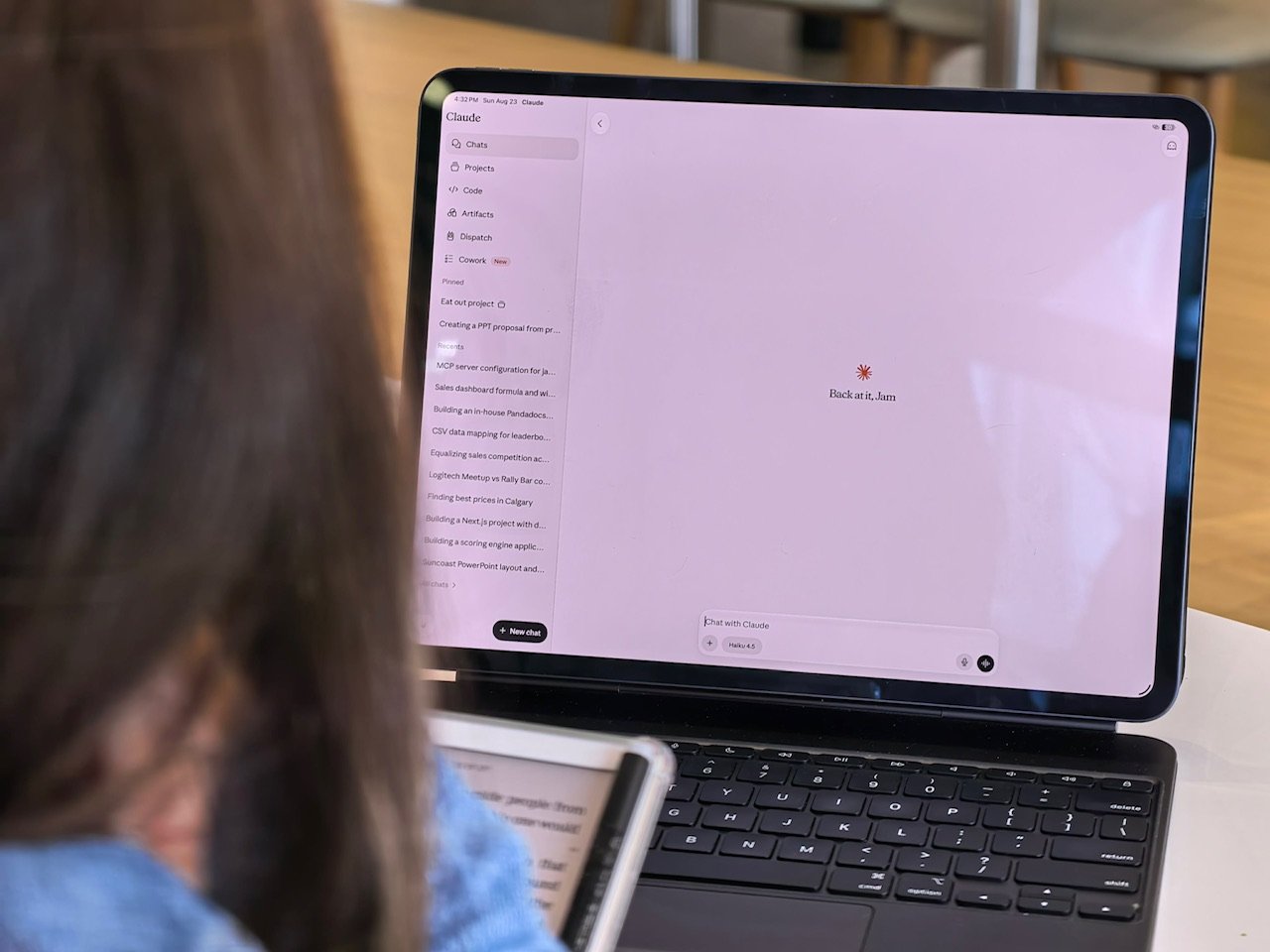
Philippines Accounts for 0.80% of Global Claude Activity
According to Anthropic’s official dataset, the Philippines represented 0.80% of total global Claude consumer usage in May 2026. This marks an 11% increase in worldwide activity share from 0.72% in April 2026. This is spanning across Free, Pro, and Max tiers.
While overall global share grew, Anthropic’s Usage Per Capita Index indicates that Claude remains underutilized relative to the country’s working-age population. The Philippines scored 0.44 in May 2026 (up from 0.41 in April), placing it below the global parity benchmark score of 1.0.
Work and Productivity Drive Filipino AI Conversations
Unlike consumer chatbot usage purely for casual entertainment, Claude in the Philippines is heavily oriented around practical daily work. Work-related tasks made up nearly half of all measured conversations.
| Primary Interaction Purpose | Share of Philippine Conversations (May 2026) |
|---|---|
| Work & Professional Tasks | 45.01% |
| Personal Productivity & Lifestyle | 31.90% |
| Academic Coursework & Study | 23.09% |
Content Creation and Software Development Lead Everyday Use Cases
When examining specific requests, Content Creation & Copywriting emerged as the dominant use case at 28.82%. Software development followed closely at 16.63%.
| Major Request Category | Share of Requests | Primary Applications |
|---|---|---|
| Content Creation & Copywriting | 28.82% | Social media copy, marketing campaigns, self-presentation |
| Software Development | 16.63% | Web front-end, app prototyping, feature implementation |
| Education & Learning | 13.02% | Homework assistance, study materials, quiz review |
| Hobbies & Lifestyle | 8.85% | Media discovery, creative writing, personal interests |
| Research & Intelligence | 5.80% | Thesis writing, market research, deep fact-finding |
| Document Processing & Operations | 4.43% | Business operations, document analysis, workflows |
Granular Analysis: Social Media Copy, Business Emails, and Theses
Post copywriting (2.52%), business correspondence (2.31%), and thesis writing (2.24%) top the list of prompt categories. Filipino knowledge workers are leveraging Claude not just for drafting messages, but also for full presentation authoring, customer support resolution, and app prototyping. Even I, uses Claude for my everyday tasks including coding.
The Human-AI Balance: Evenly Split Between Augmentation and Automation
A critical finding from Anthropic’s research is the balance between human collaboration and autonomous delegation. Philippine interactions are virtually tied between Augmentation (50.83%) and Automation (49.17%), with an AI autonomy score of 2.75 out of 5.
| Collaboration Workflow | Share of Interactions | Description |
|---|---|---|
| Task Iteration | 34.49% | Multi-turn refinement and back-and-forth prompt tuning |
| Directive Execution | 32.97% | Direct one-shot instructions and immediate task completion |
| Feedback Loop | 15.03% | Iterative feedback and review cycles |
| Learning & Guidance | 12.22% | Explanatory dialogues and step-by-step concept learning |
| Validation | 2.90% | Code review, fact-checking, and output validation |
Concrete Outputs: Reports and Code Dominate Generated Artifacts
When looking at tangible deliverables, documents and structured reports represented 15.29% of all generated artifacts. Explanations and answers followed at 12.89%, while functional websites, code fixes, and emails made up the rest of common outputs.
Computer, IT, and Creative Professions Show Strongest Engagement
Mapping Claude activity against occupational classifications reveals that Computer and Mathematical occupations (26.65%) lead overall utilization. Media, design, and editorial roles came second at 18.99%, highlighting AI’s growing role across journalism, technical writing, and graphic arts.
The Geographic Divide: Metro Manila Represents Over 51% of Usage
Adoption is heavily centralized in the country’s primary economic and technological hubs. The National Capital Region (NCR) generated 51.55% of all measured Claude activity in May 2026.
| Philippine Region | Share of Total Usage | Regional Significance |
|---|---|---|
| National Capital Region (NCR) | 51.55% | Primary corporate, fintech, and IT-BPO headquarters |
| CALABARZON (Region IV-A) | 13.20% | Industrial, tech manufacturing, and commuter corridor |
| Central Visayas (Region VII) | 9.01% | Major southern IT hub centered around Metro Cebu |
| Central Luzon (Region III) | 6.01% | Growing logistics, business parks, and university centers |
| Davao Region (Region XI) | 5.32% | Primary Mindanao digital and commercial center |
| Western Visayas (Region VI) | 2.96% | Emerging BPO and tech talent centers in Iloilo and Bacolod |
Together, NCR, CALABARZON, and Central Visayas account for nearly 74% of all Claude usage in the Philippines.
What Anthropic’s Data Means for the Future of Filipinos
The data paints a clear picture: Filipino professionals and students are not using AI merely as a novelty, but as a practical copilot. Rather than outright displacing entire jobs, Gen AI is actively restructuring day-to-day workflows, redistributing repetitive tasks to AI while allowing creators and developers to focus on higher-level problem solving.
This is an exciting frontier to see in the upcoming months and years.
Source: Anthropic Economic Index Dataset
Leave a Reply