If you’re living in Taguig and you want to experience or just buy some Mi products then you better check out the newly-opened store at Market Market of Mi Philippines. Yep, there’s a new Mi Authorized Store in Market Market and you can buy a lot of Mi items in there including smartphones, laptop, and even some lifestyle accessories.
The Mi Authorized store in Market Market is located at the 4th level of Market Market! and of course, they still have the coolest products in there including the Mi Electric Scooter, affordable Mi TVs, smart devices like the Mi Electric Stand fan and Rice Cooker.
And of course, there’s the Mi smartphones in there including the very popular Pocophone F1 that packs a powerful Snapdragon 845 chipset inside.
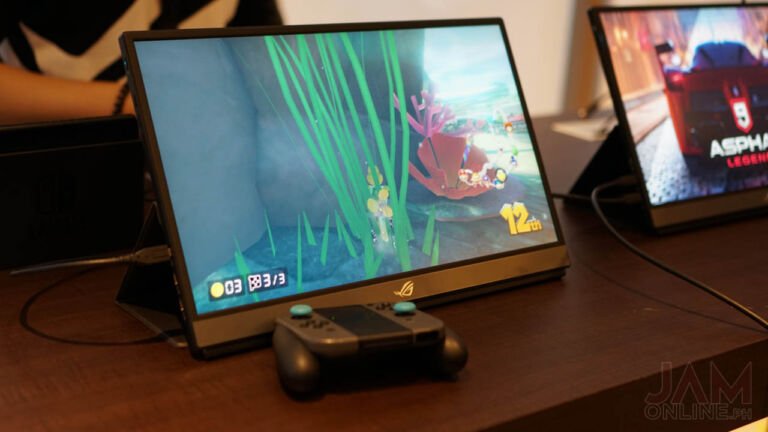
ASUS Philippines has invited selected people from the media to showcase their latest monitors that cater to the different needs of different people in the industry. Some of the highlights that we’ve seen on ASUS monitors that were launched are 0.5ms response time, FreeSync 2, HDR, and IPS displays with higher refresh rates.
If you want a brand new gaming monitor then you might wanna take a look at the VG258QR and VG278QR. Why? Because both of these monitors pack a 165Hz refresh rate with a response time of 0.5ms. Those are a really big advantage especially if you are into FPS gaming and in my experience, having a good refresh rate and a fast response time means a lot of games like PUBG and APEX Legends. While the other monitor is the VG279Q that comes with an IPS display with a 144Hz refresh rate which is new in the gaming monitor scene. The VG258QR has a 24.5-inch widescreen display with 1080p resolution with TN panel while the VG278QR has a larger 27-inch display. While theVG279Q features a 27-inch display with 144Hz refresh rate and 1080p resolution with an IPS Panel a refresh rate of 1ms
All of the monitors that were mentioned above comes with Radeon FreeSync to minimize motion blur on games which is really critical to MOBA and FPS games. Not only that, there’s an ASUS MOBA mode which lets you highlight the colors of the health bar on certain MOBA games. A really useful feature on a gaming monitor.
If you want something bigger and better then you can opt for the ROG Strix XG32VQR that features DisplayHDR 400, 144HZ refresh rate, an amazing 125% sRGB and AMD FreeSync 2 HDR. This means that the monitor offers better colors with better black and white tones and of course, a tear-free gaming experience. The ROG Strix XG32VQR comes with 31.5-inch display @ 144Hz with VA Panel, HDR 400 and 4ms response time.
While the best one that they have to offer is the ASUS ROG Strix XG49VQ features the first ASUS’ Dual Full HD (DFHD) LCD Monitor which lets you maximize the 3840×1080 resolution of the monitor. It means that you can plug in three simultaneous devices on the monitor and display it on the monitor. But not just that, it also comes with 90% DCI-P3, 125% sRGB, and DisplayHDR 400 which delivers the best colors and richer contrast on monitors. The ASUS ROG Strix XG49VQ comes with 49″ display with 3840×1080 @ 144Hz display with VA Panel. It also comes with HDR 400 and 4ms response time.
The ASUS ROG Strix XG49VQ is the best monitor for us who are into productivity as we can display a wider view of our applications or do a dual window with it. This one is also cool for gamers if they have a PC as they can run two display on this monitor. They can plug in their gaming console and their PC and play simultaneously on the ASUS ROG Strix XG49VQ
Realme 3 is definitely one of the most exciting smartphones this year because the Realme 3 packs mid-range hardware and features but it do have a price that is really affordable for everyone. And we all know that Realme is really aggressive in their pricing as proven by the Realme C1 which is our favorite entry-level smartphone.
And recently, Realme Philippines has announced that the Realme 3 will be launching this March 19. In India, the smartphone has sold 210,000 units in its first day so expect that the smartphone will be really good once it is out in the Philippines
So yeah, if you want to know more about the Realme 3 then better wait for the Livestream event at the Realme 3 Facebook page and YouTube Channel
Another affordable brand of TV has arrived here in the Philippines and this time, it’s the Chinese TV brand, CooCaa. They might be new in the Philippines but the company is actually big in other countries like China and today, they’ve launched multiple variants of TVs that cater to different needs of the Filipinos. Want to know more about it? Check it out below.
The CooCaa TVs not only offers Smart TVs but they also have Android TVs. The best part? It comes in different sizes and they’re really affordable for every Filipino. So what are these products?
First of all, they have the Change series which is really affordable. It comes in a 32-inch display with basic TV features. But of course, you don’t have to worry about it as it comes with an HD-ready panel, SRS Dolby Audio+, and a 178-degree wide angle views. The price? It’s very affordable at Php7,490.
If you want something more advanced, you can opt for the Innovate series that comes with Netflix 5.1 so you can watch your favorite TV shows and movies on the streaming platform. This one comes in two sizes — 32-inch and 43-inch. The 32-inch is priced at Php9,990 and the 43-inch is priced at Php14,990. Not only that, but these TVs also supports YouTube and you can enjoy content on your smartphones with Mira share features.
And lastly, we got the Android TV from the brand and it comes in two sizes too — 40-inches and 50-inches. Both smartphones come with Google ASsistant with AIoT technology so you can connect and command smart devices inside your home. And since this is an Android TV, you can install applications from the Play Store and it opens a lot of possibilities on these TVs. The CooCaa Android TV is priced at Php13,990 and Php22,990 for the 40-inch and 50-inch respectively.
Chargers and power banks are an essential part of our lives now. Why? Because of our smartphones and devices. And if you’re looking for a power bank or chargers that really affordable and that won’t break the bank then you better take a look at D-Power accessories. So what’s up with these products? check em’ out below.
D-Power IP988 AC Charger station
The D-Power IP988 AC Charger station comes with 4 ports in which one of them supports QC 3.0 with 5V/6A output. This charging station is the one for you if you have a lot of devices that you always need to charge.
D-Power S-28
The D-Power S-28 is a QC 3.0 Charger and Power bank package in a single design. This charger comes with up to 23W of charging for the orange port and then there’s the support for QC3.0 on the green port. Basically, this charger supports both Qualcomm Quick Charge 3.0 and also Huawei Super Charge. And oh, you can also use this as a power bank as it comes with 5200mAh battery
D-Power S8+ Wireless Charger
If you have a device that supports wireless charging then the D-Power S8+ Wireless Charger might be the power bank for you as it has a 10000mAh battery inside and it supports wireless charging. It also supports PD3.0 which means that you can charge devices up to 18W which is pretty awesome. The wireless charging of the power bank supports 5V/1A charging.
D-Power QA-05 Charger
If you need something tiny but you need a fast charging tech then you might want to take a look at the QA05 charger as it supports QC3.0 and also Huawei Super Charge. It can charge of up to 5V/4A as long as your device supports it
D-Power AC02 Power Socket
Here’s a kinda unique product from D-Power. This one is the D-Power Power Socket AC02 which lets plug in anything with its universal socket and also rotate it to not block other ports. It also comes with 3 USB ports in which one of them supports 5V/2.4A
D-Power IP955
The D-Power IP955 which is a pretty basic model comes with 2 USB ports that can charge 5V/1A and 5/2.4A. This is a pretty basic charger.
D-Power S26 Power Bank
The D-Power S26 Power Bank is a power bank that comes with LED display that shows you the current charge of the smartphone and also the power output. It can charge up to 5V/2.4A. It comes with 11000mAh battery.
D-Power S-10 Power Bank
The D-Power S-10 is a power bank that comes with an Aluminum body so you know that the power bank is tough and also mean looking. The power bank comes with QC3.0 that can charge up to 18W and then there’s the LED display which shows you the power output of the power bank. There’s a 12000mAh juice inside too.
D-Power S-15 Power bank
This one comes with everything that you need on a power bank. It has an LED display that shows you the current charge of the power bank, it also comes with 2 USB ports with USB-C for charging the power bank and it supports PD3.0. Yep, it supports QC3.0 and also PD3.0 which means that you can charge devices up to 18W.
D-Power GC51L Power Bank
And lastly, we got this power bank which is neat looking but it supports Huawei Super Charge and also Qualcomm Quick Charge 3.0. One of the USB ports supports Super Charge and QC3.0 while the other one supports 5V/1A charging. This one comes with 12000mAh of battery.
Two new smartphones from Samsung have been launched in the Philippines and these are the Samsung Galaxy A30 and Galaxy A50. Both smartphones are mid-range smartphones and surprisingly good as they pack an affordable price and also features that can really compete in the mid-range segment.
The more affordable version of the Samsung Galaxy A30 features an Exynos 7904 octa-core processor and 4GB RAM. There’s a 6.4-inch Infinity-U Super AMOLED display, a dual lens camera, and a rear fingerprint scanner.
3B6640DA ACF6 47B0 A7BF 84F06188E174
9DB1C089 8FD8 4807 AB54 5EBF0B41D6DA
7BCC767E 929F 4D17 9193 2CF9ED625066
93E6F547 2657 4DC0 8B08 95FC268BFA65
4A8537A7 3630 454A A4D2 4A03DC0CC7E4
2AC9DE65 D5DD 4C2B BF13 FEEEF56BEE0C
While the Samsung Galaxy A50 is more bang for the buck as it features an Exynos 9610 Octa-Core processor and 6GB RAM. The smartphone also features a triple lens camera in which one of the cameras is an ultra-wide angle lens, and then there’s the on-screen fingerprint scanner.
Samsung Galaxy A30 Specs
6.4-inch Full HD+ Super AMOLED, 1080×2340
Samsung Exynos 9610 processor
4GB RAM
64GB internal storage expandable via MicroSD up to 512GB
16MP f1.7+ 5MP f2.2 Ultra wide angle rear camera
16MP f2.0 front camera
LTE, Dual Sim
WiFi, Bluetooth, GPS, A-GPS
Fingerprint scanner
Fast Charging
4000mAh battery
Samsung Galaxy A50 Specs
6.4-inch Full HD+ Super AMOLED, 1080×2340
Samsung Exynos 9610 processor
6GB RAM
128GB internal storage expandable via MicroSD up to 512GB
The Samsung Galaxy A30 and A50 will be avaialble this March 30, 2019 and it will have an SRP of Php13,990 and Php17,990 respectively.
From March 16 to 29, you can pre-order the Samsung Galaxy A50 at Samsung stores nationwide and online partners and you cna get a free JBL Go2 speaker worth Php2,299, a mini tripod worth Php1,499 and a 10,000mAh battery pack worth Php1,299. While customers who purchase the Galaxy A30 from March 30 to 31 will get a free JBL Go 2 Speaker
Vivo offers a lot of smartphones for different budget and for different people and now, we got one of the latest smartphone, the Vivo Y95. The smartphone belongs to the Y-series which has a lot of smartphones for different price range but this one stands below the Vivo V11i. Check out our review of the smartphone here.
Hardware and design
The Vivo Y95 belongs in the Y-series but the smartphone does feature an interesting design. The Vivo Y95 sports a design similar to the Vivo V11i and yes, the smartphone is also available in the beautiful starry night color that we loved on the Vivo V11. The look of the smartphone is almost similar so some of you might get confused with it. The easiest way to differentiate the smartphone from the Vivo V11i is that the Vivo Y95 lacks the gold accents on the camera, fingerprint scanner and on the sides of the smartphone.
The smartphone features a glossy polycarbonate material that feels light to the hand but of course, the feel of the smartphone isn’t as premium as expected. Yes, it might be beautiful but you’ll hate that the smartphone is prone to fingerprints and also smudges. But you can use the included jelly case on the smartphone if you hate that. Thanks to the curved on the sides, the smartphone does feel comfortable to hold.
On the left, you can find the sim card tray of the smartphone that houses two sim card slots and a microSD card slot. On the other side is where you can find the power button and also the volume rocker of the smartphone.
Below is where you can find the headphone jack along with the Micro USB port of the smartphone. And at the back is where you can find the fingerprint scanner of the smartphone that works well and really fast but if you want, you can go for the face unlock of the smartphone which is pretty fast too.
Display
The Vivo Y95 features a small notch and the display is called the Halo FullView display. It’s a 6.2-inch HD+ IPS display so it’s not on par with the one on the Vivo V11 and Vivo V11i. Despite the lower resolution on the Vivo Y95, the smartphone does have decent colors and it’s surprisingly fine to me. Using it outside was just actually fine with me.
Battery life
Inside the Vivo Y95 is a 4030mAh battery which is really decent. In our test using the PC Mark app, we encountered errors everytime we finished the benchmark but the PC Mark battery test logs show that we got a result of 44398 seconds or 12 hours and 19 minutes. That’s really good for a smartphone with this battery life.
Software and performance
The Vivo Y95 runs on FunTouch OS 4.5 on top of Android 8.1 Oreo. Just like other smartphones, the Vivo Y95’s interface is easy to use but it was heavily customized to fit their UI. Swiping from the top will show you the notifications while swiping up from below will show you the different functionalities and also the running applications
The smartphone does come with some unique features such as the Jovi AI which basically runs the AI of the smartphone and then there are the apps pre-installed on the smartphone but the notable ones are WPS office for office applications, VivoCloud for their cloud service, EasyShare for easy transferring of files, and kids mode which will limit the usage and offer features that can help you limit your kid’s smartphone usage.
When it comes to performance, the Vivo Y95 does come with a Snapdragon 439 chipset, 4GB RAM, and Adreno 505 GPU for gaming. When it comes to light usages such as browsing your Instagram, Facebook, or Twitter, then the smartphone wouldn’t be a problem for you however if you’re planning on using the smartphone for gaming, you might need to do adjustments to enjoy some games.
In our benchmarks, the difference in performance between the Vivo V11i and the Vivo Y95 is noticeable. Check out the different benchmark scores that we got on the smartphone.
The camera UI of the Vivo Y95 is basic but it is definitely easy to use and easy to understand. It easy to add bokeh, activate HDR, and to use different functionalities of the smartphone and with the pro mode, you can adjust the focus, white balance, shutter, ISO and the EV of the camera. As expected, you can use different functions on the smartphone which are – DOC for shooting documents, professional, panorama, face beauty, photo, video and AR sticker. The Vivo Y95 can shoot 1080p videos too if you’re the type of guy who loves to take videos.
Shooting using the rear camera of the smartphone is just fine when there’s enough lite, however, under lowlight, you’ll notice the flaws of the smartphone’s camera as it tends to be blurry at times. I also noticed that the AI of the smartphone definitely helps in the Face beauty mode of the smartphone.
The selfie camera is one of the strengths of having a VIVO smartphone. The smartphone features a 20MP front camera on its tiny notch at the top and surprisingly, I can get good selfies on the smartphone whether I’m using the smartphone at lowlight or at decent lighting conditions. Check out the shots that I took using the smartphone below:
IMG 20190217 104603
IMG 20190217 104613
IMG 20190217 104456
IMG 20190217 104515
IMG 20190217 101929
IMG 20181228 181039
Verdict
The Vivo Y95 is definitely one of the best-looking smartphones out there in its price range thanks to the availability of different colors and also its comfortable design. There’s long battery life on the smartphone too and the selfie camera of the smartphone was really fine.
However, the Vivo Y95 is sporting a Snapdragon 439 chipset which might not be your ideal chipset especially if you’re into gaming or heavy processing usage on the smartphone. Nonetheless, if you’re just into social media, selfies and long battery life, the Vivo Y95 won’t be a problem for you.
Mi Philippines will launch their newest smartphone in the Philipines and it’s the Redmi Note 7 which is the latest mid-range smartphone from the brand and also their first smartphone under the Redmi brand of Xiaomi. The smartphone will also sport a 48-megapixel rear camera and also a Snapdragon 660 chipset inside.
Smart Communications and Nokia has recently signed a memorandum of understanding at Makati City, Philippines to pilot the deployment of 5G wireless broadband technologies and services in schools.
Both companies will collaborate in real-world solutions and enterprise-led 5G standalone solutions such as artificial intelligence, drones, and IoT which can be used in schools, colleges, and universities and these projects and services will be done with the combined technologies and capabilities of PLDT-Smart 5G Technolab in Makati City, and the Nokia Technology Center in Quezon City.
The difference between 5G SA (5G standalone) and 5G NSA (5G Non-standalone) is that 5G SA relies solely on the 5G for data transmission and it allows the full benefit of 5G capabilities to be demonstrated while the 5G NSA combines the use of 5G and the existing technologies such as 4G and LTE to transmit data.
Aside from the services that Nokia and PLDT are planning in the future, the MoU also covers the deployment of 5G SA technologies and innovative products like their 5G hands and applications in the future.
Back in 2016, Smart and Nokia have already explored the 5G technology and it even achieved 2.5 Gigabits per second using the 100MHz frequency with the latency of 1 millisecond which is a first in the Philippines.
PLDT and Smart’s fiber network now extends at over 244,000 kilometers which is why PLDT and Smart are best positioned to deploy 5G in the Philippines. In case you didn’t know, PLDT and Smart are currently rolling out their LTE and LTE-Advanced in the country along with its 5G-capable equipment.
Smart is very serious in its 5G preparations as the company has launched the 5G Technolab which is their flagship facility for R&D, standardization, and testing of 5G. Aside from that, they’ve also launched the first Smart 5G cities in Pampanga and Makati after Smart has fired up the first 5G cell sites in Clark Freeport Zone, and the PLDT HQ in November last year. Smart has also demoed the first 5G to 5G video call in the country between the two 5G Smart cities.
One of the hottest smartphones that were unveiled this year is the Huawei Mate X. Why? Because it is the company’s first foldable smartphone. The foldable segment is still new and we might see a lot of improvements and possibilities in the future once the technology gets into the mainstream but for now, we’re amazed at the Huawei Mate X as we can fold the smartphone and have a 6.6-inch display to 8.0-inch which opens up possibilities in the future smartphones but also in gaming.
Recently, we got a hands-on of the smartphone, the Huawei Mate X and it’s really awesome. Not just it’s powerful inside, but the smartphone is really damn beautiful out the outside. Its form factor has a lot of advantage as you only have a single display and it doesn’t feature a notch thanks to its form factor.
Aside from the foldable display, another cool feature here is that we got a Balong 5000 5G modem inside which is based on a 7nm fabrication. This is currently the fastest 5G modem that we have on a smartphone and I’m quite amazed at every bit of technology of the smartphone. Want to know more about it? Check out our short hands-on video of the Huawei Mate X below: