If you don’t want the Nintendo Switch because it is expensive and it still lacks a lot of games and you prefer something else like the Nintendo 3DS but you don’t want the 3D effect then here’s the new console from the company, the Nintendo 2DS Xl. So basically, the Nintendo 2DS XL is a clamshell with a large display unlike the 2DS and it can run 3DS games without problems.
In case you don’t have any idea about Nintendo consoles, the Nintendo 2DS XL will still work similarly to the Nintendo 3DS and the 3DS titles will work well on the Nintendo 2DS XL except that we lost the 3D display.
The Nintendo 2DS XL is also available in white & gold and black and blue and both of them looks damn good. The system will be available on July 28 and it is priced at $149.99
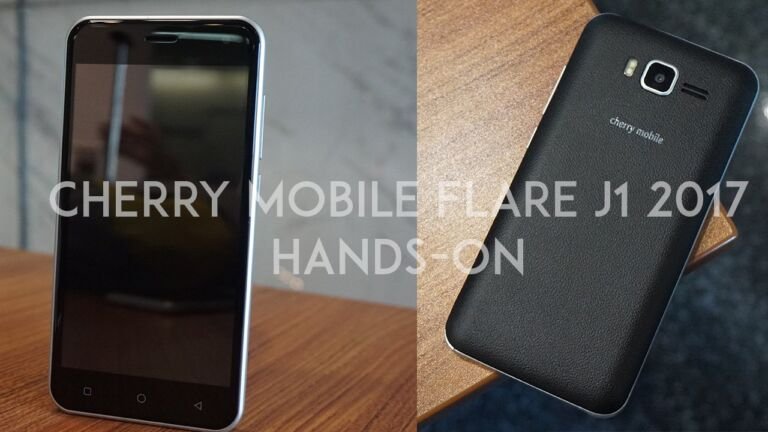
When you’re looking for a tough smartphone, Cherry Mobile might not be on top of your list but hey, that might change now with the Cherry Mobile Flare J1 2017. Why? Because this smartphone has a very tough display (Yes! Only the display not the body). Yes, it’s really tough that I decided to throw the smartphone off the table and also beat the smartphone’s display to a solid wooden table and yes, the Cherry Mobile Flare J1 2017’s display was able to survive that. Want to see how tough the Cherry Mobile J1 2017 is? Check out my hands-on video in where I torture the smartphone a little bit.
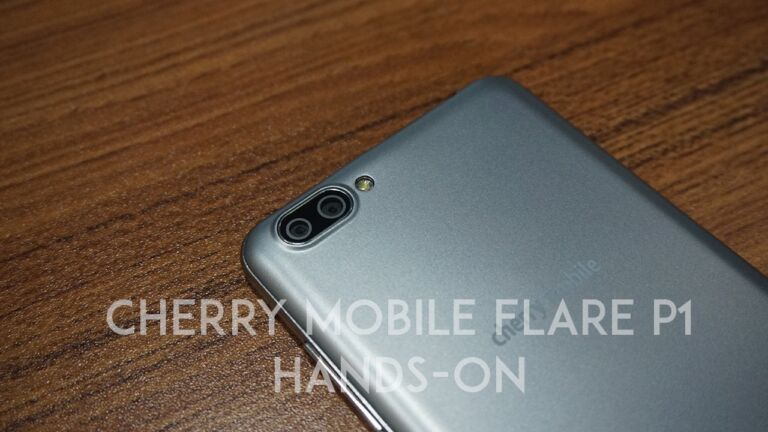
Cherry Mobile has recently unveiled their newest and first smartphone to pack a dual lens camera that wouldn’t break the bank, the Cherry Mobile Flare P1. This smartphone is priced at P3,999 and it packs a dual lens camera at the back which lets you take photos with bokeh effect. Do you want to know more about it? Check out our hands-on video of the Cherry Mobile Flare P1 below.
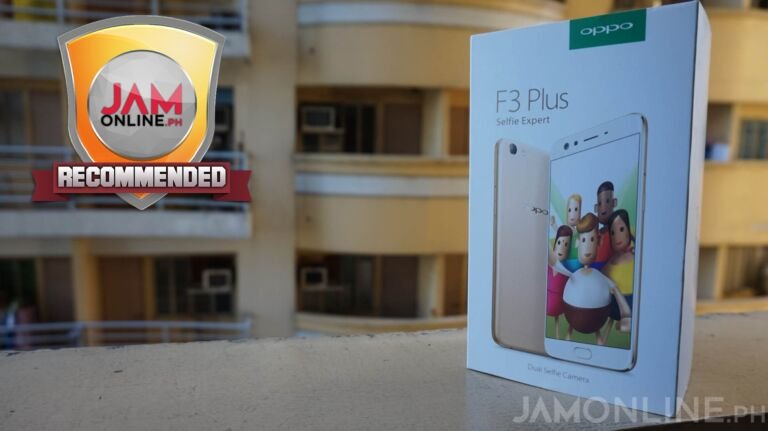
The OPPO F3 Plus is the newest smartphone from the brand and this is their best offering yet as this smartphone offers a dual selfie camera which is best for taking selfies and groufies without the use of a tripod. Aside from that, the smartphone got some muscles too as this one packs a Qualcomm Snapdragon 653 processor. So what do I think about it? Check out my review of the smartphone below.
It’s big but it doesn’t feel one
The F3 Plus sure does have a big display at 6-inches but it doesn’t feel like it does have one as the smartphone is still comfortable to use. The smartphone actually feels like it only has a 5.7-inch display. Looking at the design of the OPPO F3 Plus, it actually looks like and feels like an iPhone 7+. Is it bad? No because the OPPO F3 Plus feels and looks more than its price.
At the back of the OPPO F3 Plus is similar to the one that you can find on the OPPO F1s with the OPPO logo at the back except that the lines the back are more minimal compared to the OPPO F1s. Another thing that I love in this smartphone is its metal build. The OPPO F3 Plus feels very premium, however, I recommend that you use the included jelly case in the box as the smartphone might slip easily in your hand.
The smartphone packs a hybrid sim card slot which allow you to add a dual sim or a single sim with a microSD card. But don’t worry too much about the storage as the OPPO F3 Plus packs a 64GB of Internal storage. Below the smartphone is the audio jack, speaker grill and the micro USB port which is a little surprise to me as most new smartphones these days now pack a USB Type-C as it packs more features and it’s also reversible.
One thing that you would probably hate in this smartphone is its home button. The home button also acts as the fingerprint scanner for the phone and alongside with it is the back and recent button which is hiding in plain sight. But don’t worry, the back and recent apps button would light up if you unlock the smartphone. So what’s the problem with it? Well, not really a big one because the home button can’t be pressed on the smartphone. It works similarly to the iPhone 7 and 7 Plus. Some people might take some time before getting used to it.
A good battery life
The OPPO F3 Plus packs a 4000mAh of battery but that’s quite normal for a smartphone this size. The smartphone performed pretty well in my use as this smartphone was able to last more than a work day. Yes, you’ll have to charge it every day but I’m pretty sure that the OPPO F3 Plus would last more than 12 hours of use.
I was even able to use it from 8 AM up to 8 PM and I still have some juices left. My activities include browsing my newsfeed on Facebook, watching videos on YouTube and some minor gaming.
A large Display
By just looking at it, you know that the OPPO F3 Plus packs a large display. However, the smartphone feels like it only has a 5.7-inch display and you won’t feel that it’s a 6-inch display because of the thin bezel on the sides. The display of the smartphone is only Full HD but it looks pretty good. The viewing angles and the colors are fine and even at direct sunlight, you won’t have a problem using this smartphone.
The smartphone is just really good for watching videos because of its size and it also is great for gaming as you have more space for navigation and yet, the smartphone still doesn’t feel like it has a 6-inch display
User-friendly UI
One thing that you got to love with OPPO F3 Plus’ Color OS is that not only that the icons and visuals look good but for new smartphone users, it’s also user-friendly. Also, if you came from iOS, you wouldn’t really have a hard time adjusting to the smartphone.
The OPPO F3 Plus features a home screen that also acts as the app drawer. Yes, it does come with some bloatware but most of them are useful. The colors that are used in the OPPO F3 Plus UI is also fancy and easy to the eye.
However, I wished that the OPPO F3 Plus got the latest Android 7.0 Nougat because this smartphone would even be better if it supports multi-window. I mean, you got a large screen and doing multitasking on this smartphone would be very productive. I wish the update for Android 7.0 for the OPPO F3 Plus would come sooner.
Powerful hardware inside
Compared to other OPPO smartphones available in the market right now, the F3 Plus is the most powerful of them all as this one packs a Qualcomm Snapdragon 653 Processor and 4GB of RAM. When it comes to gaming, the OPPO F3 Plus doesn’t fail on anything. It can run all games and apps without a problem and yes, you don’t have to worry about gaming in this smartphone
The smartphone does heat up when playing games but it doesn’t get to the point that the smartphone is too hot to overheat. The thermals of the phone are just fine however it’s a little bit hot sometimes but again you don’t have to worry about it too much.
An amazing dual front camera
The OPPO F3 Plus’ main feature is its front facing camera but before we proceed to that, let’s talk about the rear camera of the OPPO F3 Plus. It’s a 16-megapixel rear camera and in my use, it isn’t that bad. It’s actually good for taking decent photos. As long as there’s decent light, the rear camera of the OPPO F3 Plus can take great photos and at low light, the OPPO F3 Plus still did pretty well. Check out the photos that I took using the rear camera of the OPPO F3 Plus:
IMG20170413195143
IMG20170413171550
IMG20170413154304
IMG20170412222832
IMG20170412222451
IMG20170422151035
The front camera of the OPPO F3 Plus is packed with a 16-megapixel front camera and also an 8-meagpixel wide angle front camera. One is for taking portrait selfie shots while the other one is for taking groufies. Yes, grofies, that’s the term that they’re using and with the OPPO F3 Plus, you won’t have to use a monopod for taking group photos using the front camera.
The front cameras actually have different qualities but I’ll say it to you now that both front cameras are really good when taking selfies. The OPPO F3 Plus has one of the best selfie camera that you can find in the market. The 16-megapixel rear telephoto lens works really fine and the details of the shots are on point and yes, it works and performs better than the wide angle camera and you can see the difference in terms of quality between the two especially at low light. But again, the wide angle front camera is still good and works fine for taking groufies. Check out the front camera shots that I took using the smartphone:
IMG20170411182454
IMG20170323174419
IMG20170323174421
IMG20170323174425
IMG20170323214441
IMG20170323214613
IMG20170324174302
IMG20170408141951
The camera app is very user-friendly and you won’t have a problem using it as the interface is easy to learn and also easy to use. The interface is similar to the iPhone and by just swiping, you could choose different modes of the camera. Also, the beauty mode of the OPPO F3 Plus lets you add selfie bokeh shots however, the bokeh effect of the OPPO F3 Plus isn’t perfect.
Verdict
I really had fun using the OPPO F3 Plus. It’s a 6-inch smartphone and yes, it’s big but it doesn’t feel like one. Not everybody would be fond of its size but the OPPO F3 Plus is really fun to use for watching movies and TV series on Netflix, gaming, and of course, taking selfies.
OPPO might be marketing the OPPO F3 Plus as a smartphone made for selfies and groufies but actually, OPPO F3 Plus is more than that. The smartphone is made for selfies, great for media consumption, great for hardcore gaming, and for everything. It’s not the best smartphone in the market but it’s definitely worth for its price.
Samsung Philippines has recently launched the Galaxy S8 and S8+ in the Philippines and they got a little bit of surprise to you because Samsung Philippines has included some perks for you guys and also a VIP Customer Service for every buyer of Samsung Galaxy S8 and S8+. They’ll be able to enjoy some perks and also services that are only available to Samsung Galaxy S8 and S8+ users.
First, the Samsung Galaxy S8 and S8+ comes with mySamsung that comes with perks that let you have free Iced Coffee every Friday at CBTL, a free lounge access at NAIA and Free iFlix access for 6 months. I know, that’s a lot of value especially if there’s a near Coffee Bean at your place or you’re always traveling.
Aside from that, Samsung Galaxy S8 and S8+ also comes with a VIP customer service in where they’ll be able to have a 24/7 dedicated hotline and also a pickup and delivery in case something has happened in your Samsung Galaxy S8 and S8+. Not only that because if your Samsung Galaxy S8 and S8+ is being repaired, you can also enjoy a loaner unit for the meantime while your smartphone is being fixed.
Well with this, I believe that we’re getting a lot from this and the price of the Samsung Galaxy S8 & S8+ is definitely worth it.
PayMaya has recently launched a campaign to drive and empower more millennials in this economy. We know that we are already in a digital economy in where most of us millennials shop online or even buy digital currencies for our favorite mobile games. Millenials are an emerging market force globally and here in the Philippines, 35% of our population belongs to that group. Just in case you didn’t know the age of Millenials, they’re in the age group of 15 to 34.
The new PayMaya brand ambassadors include Alyssa Valdez, Louis Faure, TNC Pro Team, Gael Hilotin, Jappy Agoncillo, and Ava Te-Zabat. All of them are connected to us millennials in their own way. For gamers, I’m pretty sure that they know TNC Pro Team who made us really proud when they beat OG in TI6.
I’ve been using PayMaya and it’s pretty cool because it lets you purchase or pay online with without even having a credit card. Yes, you don’t need to apply to banks anymore because all you need is an app just to have your own credit card. And the good thing about PayMaya is since this one is prepaid, you won’t have to worry about not unnecessary and uncontrolled purchases online.
For young people like us or people who just started working, PayMaya lets you take care of your own bills in MERALCO, Globe, PLDT, Smart, Sun, Sunlife, Home Credit, & Maynilad. Not only that, you could also use PayMaya’s shop to purchase load and data with discounts.
The PayMaya wallet can be reloaded in 15,000 top up stations nationwide that includes SM Business Centers, Robinsons Department Stores, 7-Eleven with CLiQQ kiosks, Ministop with Touchpay kiosks, Wellcome, Shopwise, 2Go outlets, Smart Padala centers, UnionBank ATMs, and online banking via BDO.
PLDT Fibr has recently landed in Mindanao and PLDT is now serving the residents of General Santos City making it the first ‘Fibr City’ in Mindanao. Fiber-to-the-home facilities roll-out will also benefit the other provinces in the region including South Cotabato, Cotabato, Sultan Kudarat and Sarangani.
Residents in General Santos City can now experience the speeds of up to 1 Gbps thanks to PLDT Fibr. With that speed, you can download steam games in a few seconds, stream Netflix videos in 4K, & of course, upload high resolution videos in minutes or probably seconds.
PLDT Fibr goes as low as P1,899 which will give you speeds of 50Mbps with data allocation or 20Mbps with unlimited data and you can actually add some gadgets and peace of mind with their Fam Zone Security platform, Fam Cam, or their latest Smart Watch.
Oh look, one of the best games on the planet is now available for free. yes, The Witcher is now free thanks to the team up of GOG and Ars. Both companies are in talks with each other and as a treat for their partnership, they’re giving away hundreds of thousands of copies of the Witcher: Enhanced Edition for free. It’s actually easy to claim one, all you have to do is to click this link and head over to the sidebar to claim the code by just supplying your email address.
You don’t have to worry whether you’re using MacOS or Windows because it’ll work just fine. Hurry! the giveaway is only running for a limited time so better check out the link now!
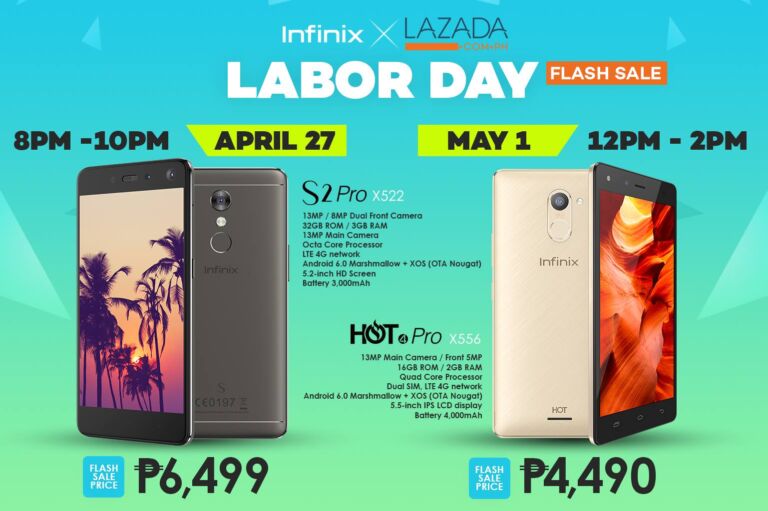
There will be a flash sale for Infinix Mobile smartphones tomorrow and on May 1. The first one in line for the flash sale tomorrow is the Infinix Mobile S2 Pro which is down to P6,499 from the original SRP of P8,990 while the other one is the Infinix Mobile Hote 4 Pro which is down to Php4,490 from Php7,500
Infinix Mobile Hot 4 Pro Specs
MediaTek MT6737 Quad-Core Processor
5.5-inch IPS Display
2GB RAM
16GB Internal Storage with MicroSD card slot up to 64GB
13-megapixel rear camera
5-megapixel Front camera
Dual Sim
LTE
Bluetooth, WiFi, GPS, A-GPS
Android 6.0 Marshmallow + XOS (OTA Nougat)
4000mAh Battery
Infinix Mobile S2 Pro Specs
MediaTek MT6753 Octa-Core Processor
5.2-inch IPS HD Display
3GB RAM
32GB Internal Storage with MicroSD card slot up to 64GB
13-megapixel rear camera
13-megapixel + 8-megapixel front camera
LTE
Bluetooth, WiFi, GPS, A-GPS
Android 6.0 Marshmallow + XOS (OTA Nougat)
3000mAh Battery
The Infinix Mobile S2 Pro will be on Flash sale tomorrow from 8PM-10PM and it will have a flash sale price of P6,499. This smartphone is ideal for people who loves take groufies as this smartphone features a dual lens camera on the front in which one of them is a wide-angle lens.
While on May 1 12PM-2PM, the Infinix Mobile Hot 4 Pro which is an affordable smartphone will be on sale for P4,490. If you’re looking for an affordable smartphone with decent specs then you might want to check this out. You can find Lazada’s Flash sale page in this link: http://www.lazada.com.ph/labor-day-flash-sale-day-8/?boost=1
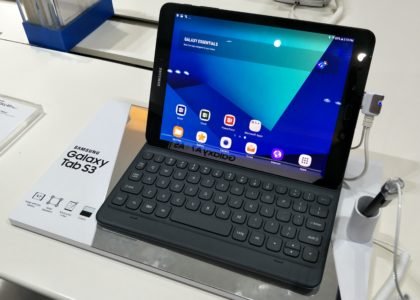
The Samsung Galaxy Tab S3 was unveiled last February at Mobile World Congress and it aims to compete against the iPad Pro. The Samsung Galaxy Tab S3 is a little bit steep at Php37,990 because the variant that we’ll be having comes with LTE connectivity. Not only that, there will be also an included S Pen that you can use for drawing and writing stuff. The Samsung Galaxy Tab S3 will also have pogo pins that will support the keyboard cover that works similarly to the keyboard cover of the iPads. However, it will be sold separately.